In the middle of August (yes, I know, I’m getting even further behind) we arrived on our second continent, and our fourth country, and immediately encountered the bewildering rush of Tokyo.
A very cheerful and excitable taxi driver, Mr Yamata, drove us from the distant airport to the centre of Tokyo and deposited us at a very sleek, modern hotel with sleek, modern, tiny rooms. Our four suitcases filled every available inch of floor space.
And then we stepped out into the night.
Shinjuku
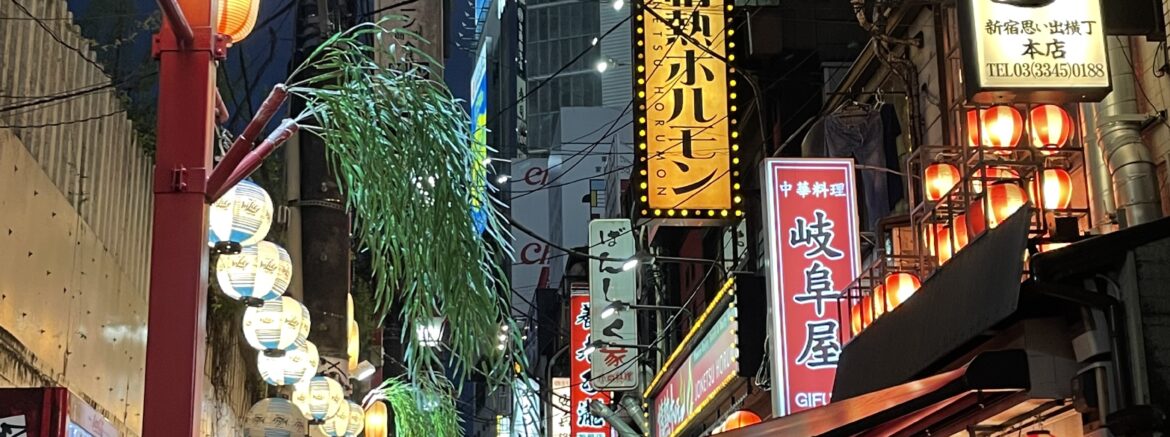
On our first night, our sole ambition was to stumble out of the hotel and stay awake long enough to have dinner. We aimed for Omoide Yochoko (“Memory Lane”), a beautiful street packed with restaurants just a short walk away. The short walk introduced us to Shinjuku, the neighbourhood of our hotel, and incidentally Tokyo’s red light district.
Japan is an extremely civilised and mannered society, so this is the most civilised and mannered red light district you’ll ever stroll through. Among the regular bars and shops you see numerous bars with young women standing outside – sometimes in bunny ear or schoolgirl costumes (ugh) – who are holding boards with prices on. The service they’re offering is to accompany you into the bar they work for, where they will make you feel like a young woman in a sexy costume is riveted by your company and hanging upon your every word, while you buy very alcoholic drinks for yourself and very expensive non-alcoholic drinks for them. You will pay the price on their board just to enter the bar. Then at the end of the night they will remind you that it’s time to go home. Presumably more illicit things do happen, somewhere out of sight, but Japan is safe to an almost ludicrous degree and the notorious red light district was mainly just a perfectly friendly spectacle of flashing lights and wild costumes to walk through.
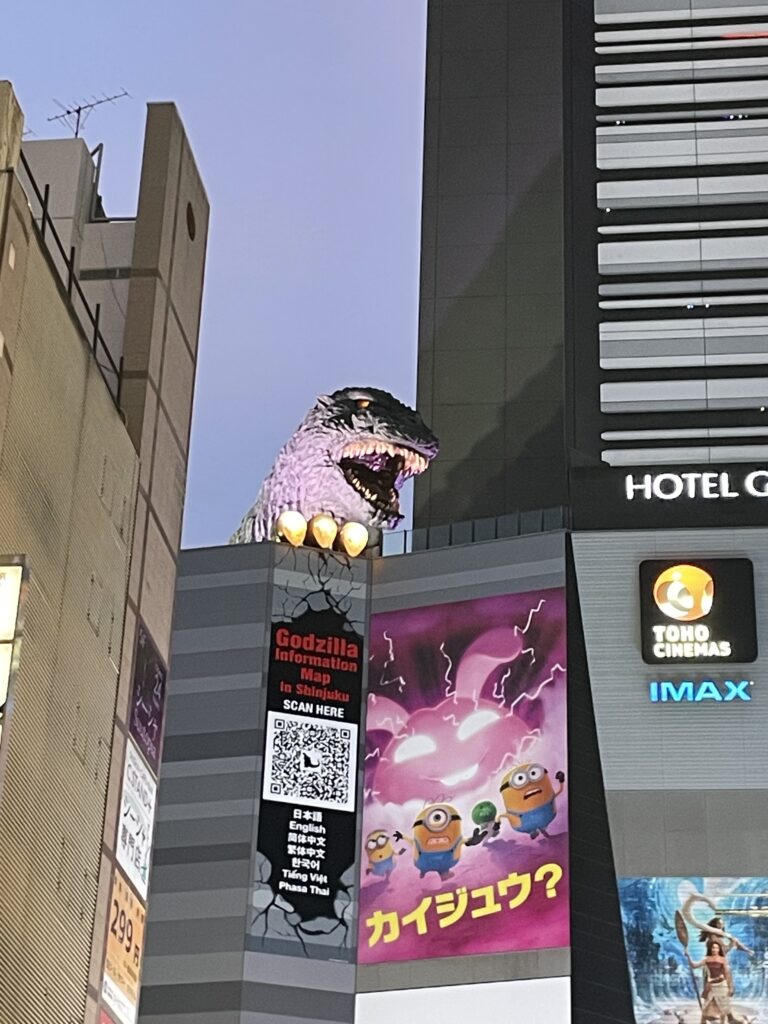
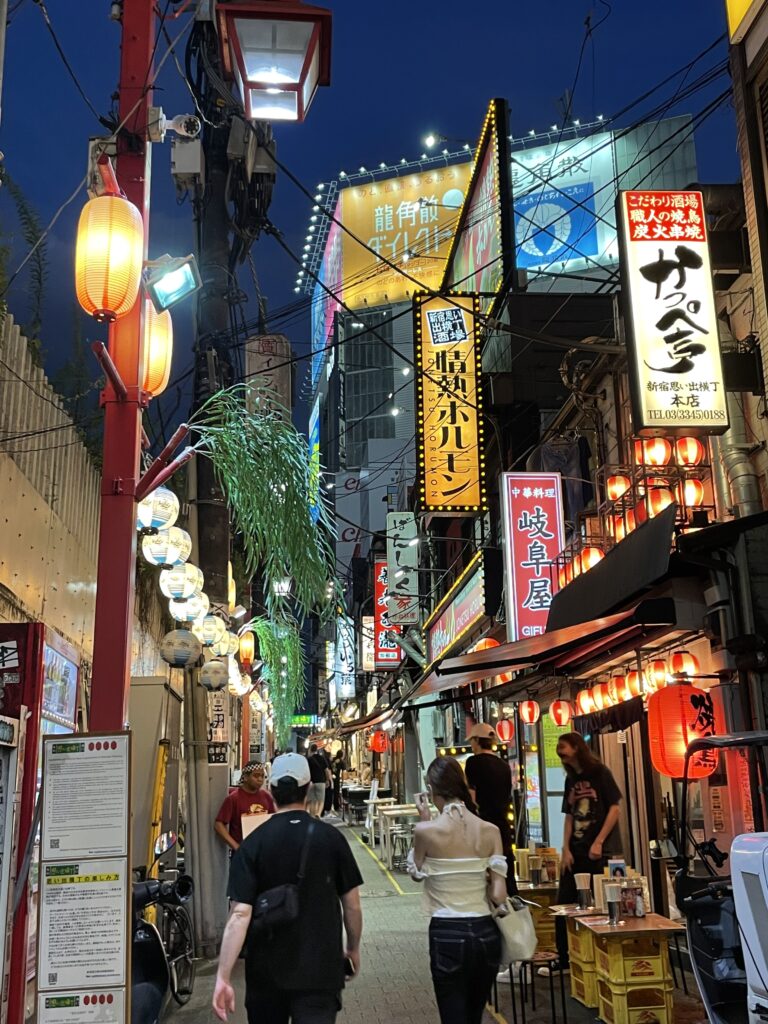
Shinjuku is also where locals come to find nightlife, so it offers streets of manic illuminated signs and all kinds of other scenes that will come to mind when you hear the name “Tokyo”. On the way to the restaurant, for example, we passed Godzilla, who inhabits the top of a cinema and roars at passers-by every hour.
Then, when we’d eaten, we went to bed and slept for an eternity, which was wonderful. In the morning we were collected by a local guide, an Irishman called Fergal who has been here for ten years or so, and he took us for a day of sightseeing and acclimatising to life in Japan.
Shibuya
There are precisely two things to see in Shibuya and there will be crowds of people at both of them all day long. The two crowds are very different.
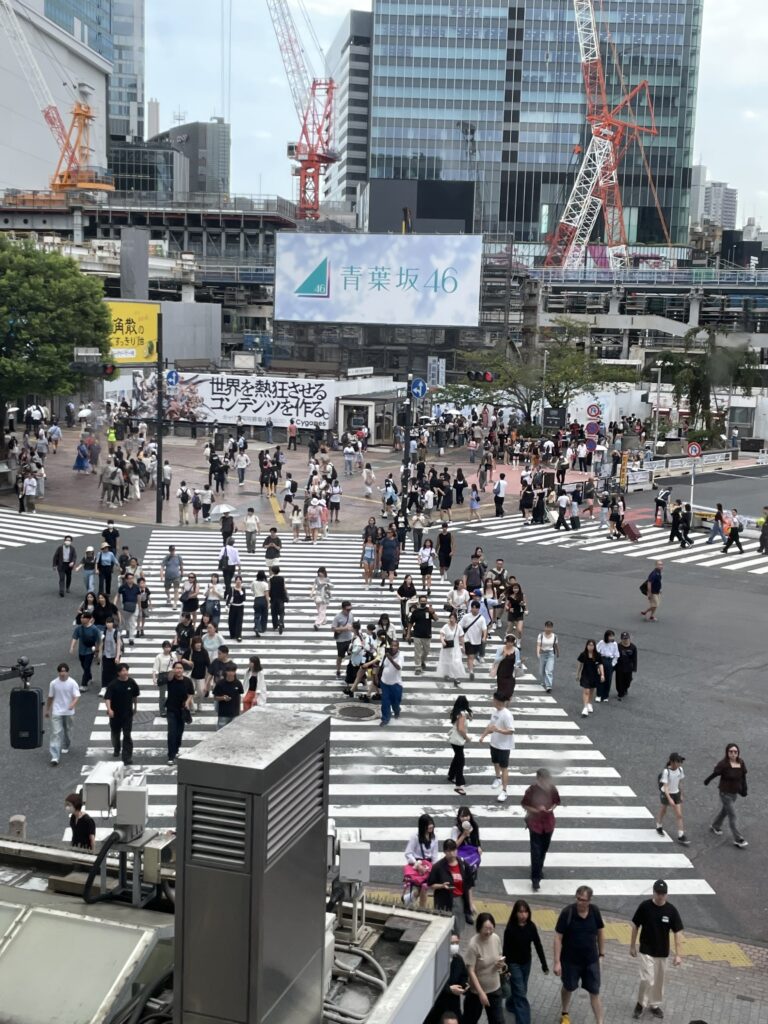
The thing you and I recognise is Shibuya Crossing, reputedly the busiest pedestrian crossing in the world. If you’ve ever seen a TV show or a film that’s set in Tokyo you’ve seen this, a crossroads with an infinity of people swarming across it. You can get a good view from Starbucks which is two floors up, but on a Tuesday morning it’s just a big zebra crossing and the legendary crowds only happen at certain times of day.
The other thing people come to see is a small bronze statue of a dog called Hachiko. In the 1920s his owner used to leave him here while he went to work. (Apparently that was fine back then.) One day the owner died while he was at work, and Hachiko spent the following years, until his own death, faithfully waiting at Shibuya station for his owner to come back. While he kept his vigil he became a local celebrity and people made sure he was looked after.
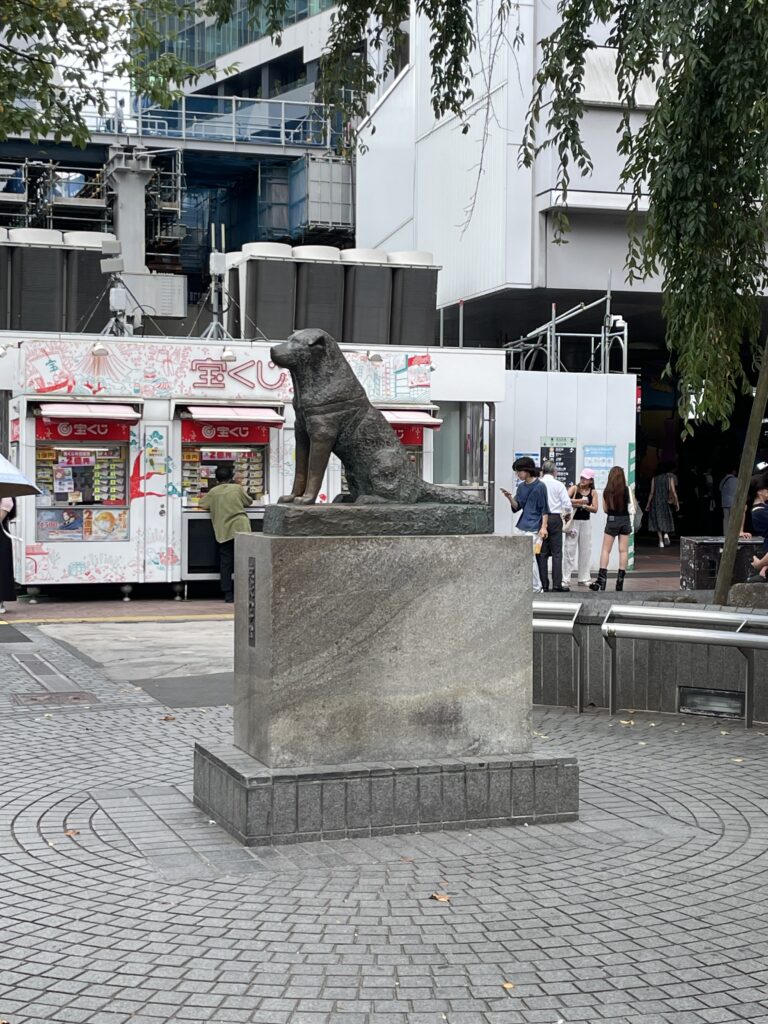
The statue is a nationally famous landmark in Japan and is typically where people arrange to meet if they’re coming to Tokyo from elsewhere. It has its own information kiosk and souvenir stalls, which the crossing does not. The crowds of Japanese people taking pictures and reverently admiring Hachiko mostly don’t know that the adjacent crossing is famous across the rest of the world, and don’t really understand why the foreign tourists are taking pictures of the crossroads and not the famous dog.
Ginza
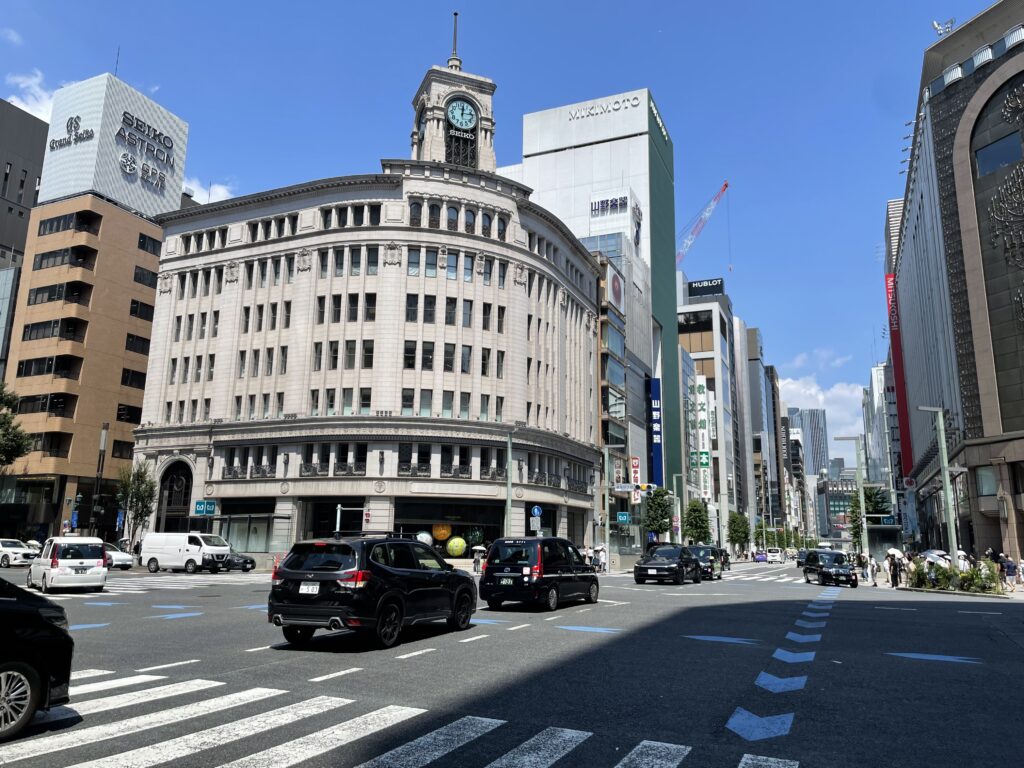
Tokyo’s most expensive district is Ginza. Fergal gave us some numbers about how astronomically expensive it is to rent a single square centimetre of floor space here, which I can’t remember, but suffice to say neither you nor I will ever rent a flat here. It’s also on the verge of the financial district so the swankiest department stores rub shoulders with the glassiest office towers in Ginza.
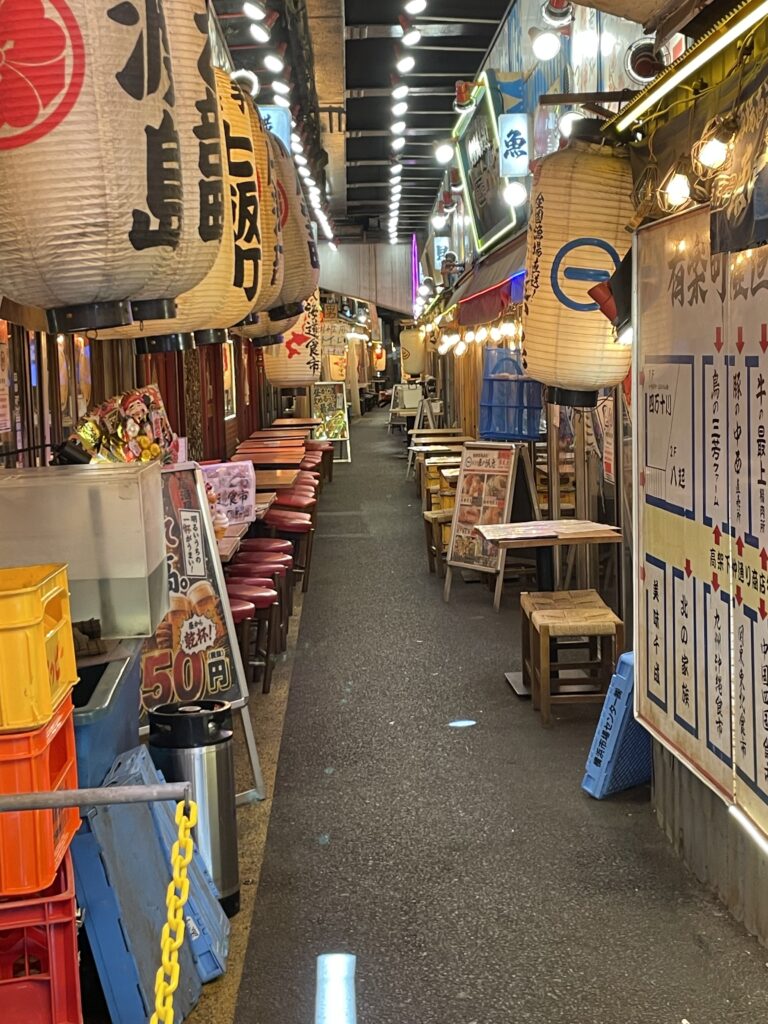
We passed through some secret bars under the railway arches and stopped for lunch at the most ridiculous Sushi restaurant. Ordering took place on an enormous touchscreen that formed one wall of our cubicle, and food arrived by conveyor belt, in an ingenious system that sent the correct dish to the correct booth using a system of points and rollers.
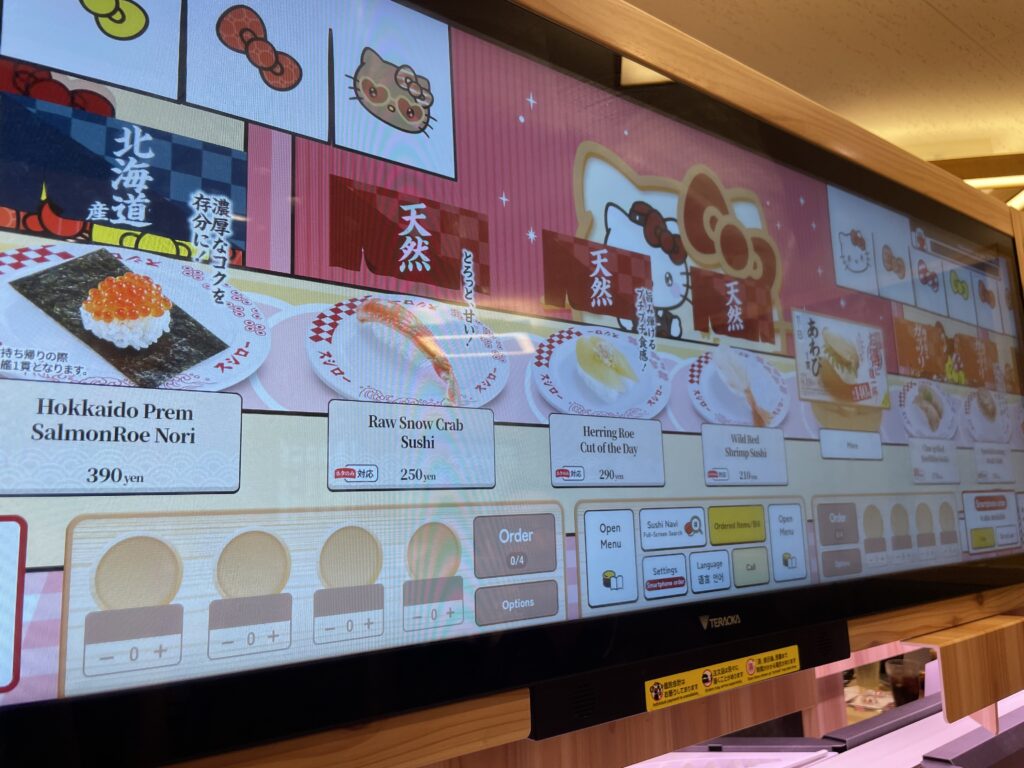
After ordering a certain amount of food you got to play a game on the touchscreen to win prizes, but we didn’t win anything, and I blame the panda character we chose as our avatar.
Hama-rikyū Garden
Tokyo is bigger and busier than you would believe, even if you were bracing yourself for it to be enormous and busy. Almost 30 million people live in the urban area, with the result that people are absolutely everywhere. Every pavement, every train, every shop – everywhere is busy. It’s thrilling and giddying and also, when you got off a 14-hour flight yesterday, exhausting.
For this reason Fergal took us to Hama-rikyū Garden. In days gone by a Shogun (a local lord in feudal times) kept this as his private walled garden for strolling and contemplating. It’s now preserved as a park right next to Ginza and the financial district.
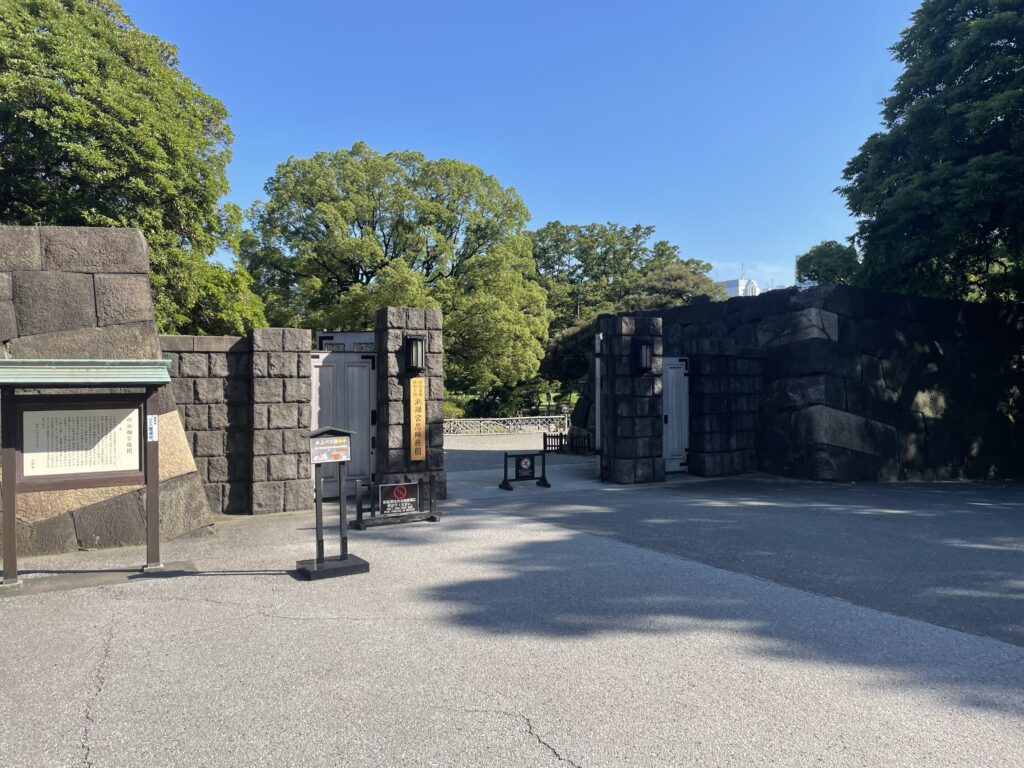
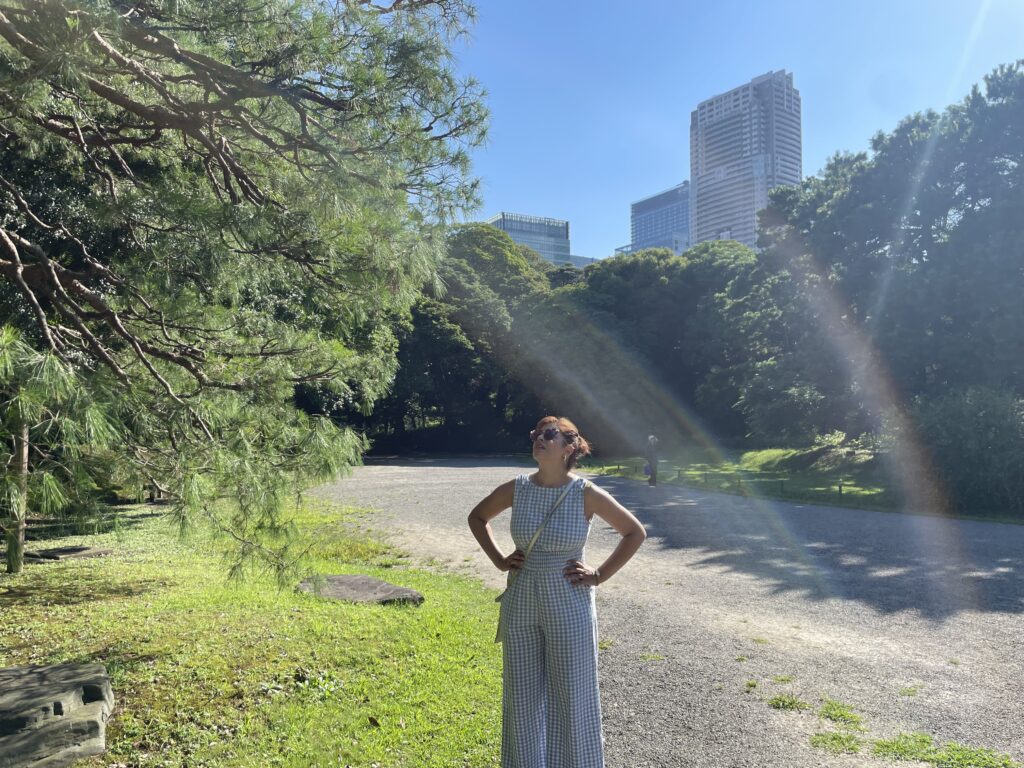
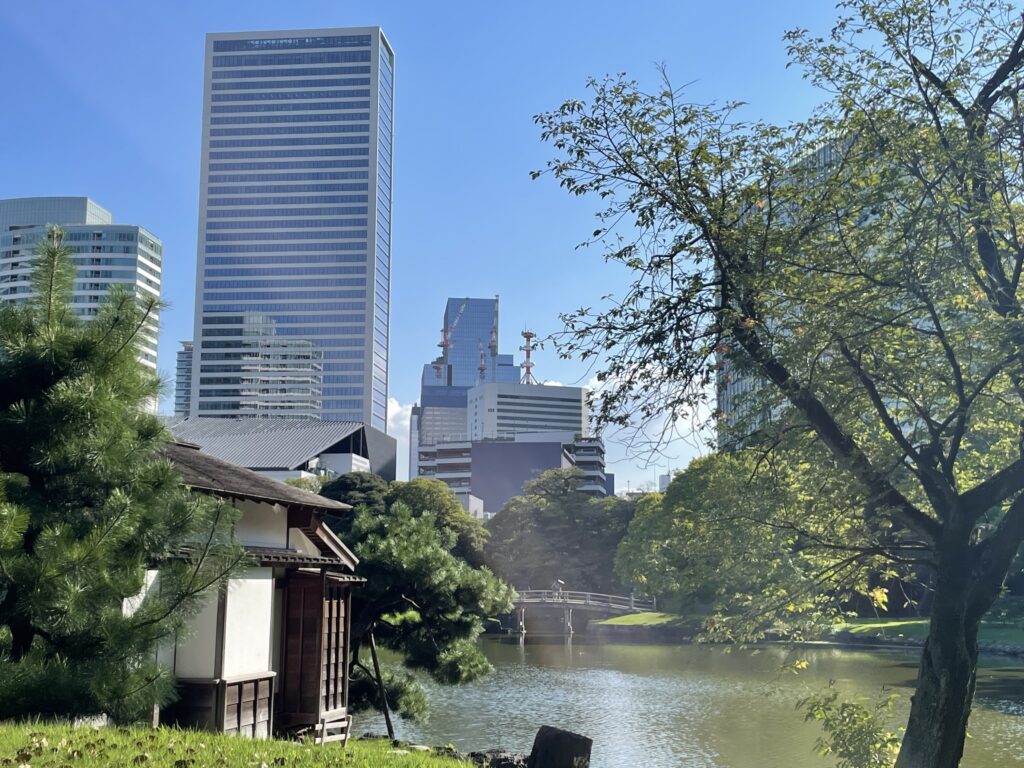
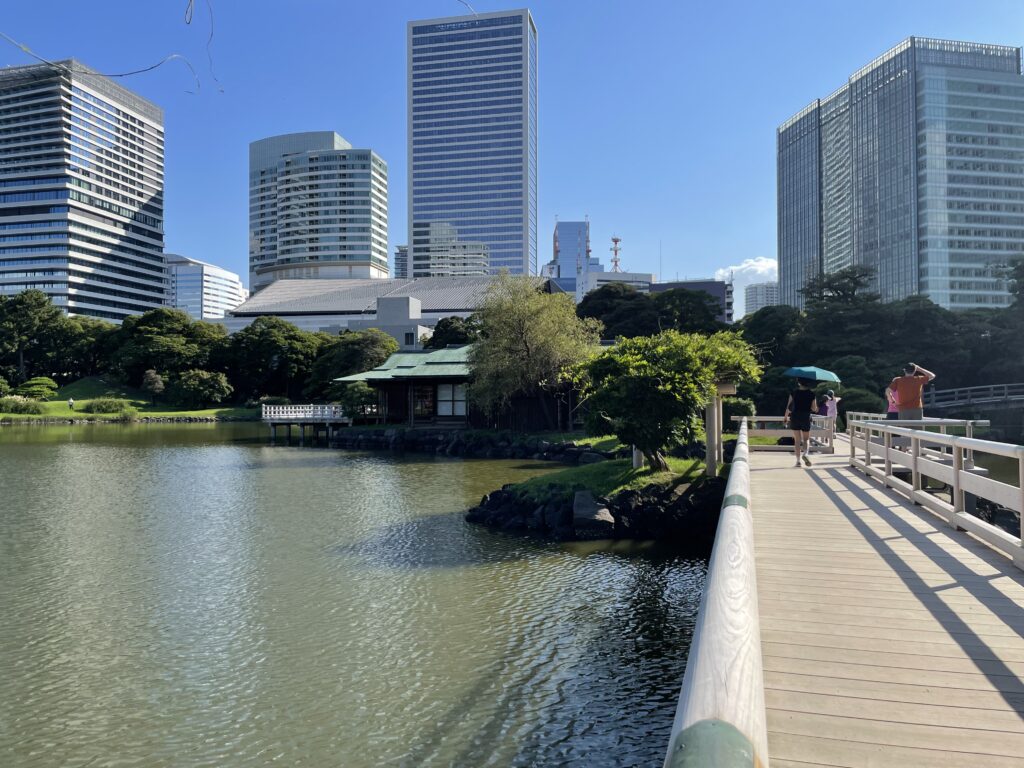
It’s tranquil and spacious – everything the rest of Tokyo is not – but the towers and buildings of Tokyo are always there in the background because it’s now just a pocket of green space, surrounded by walls and moats, in the middle of the city.
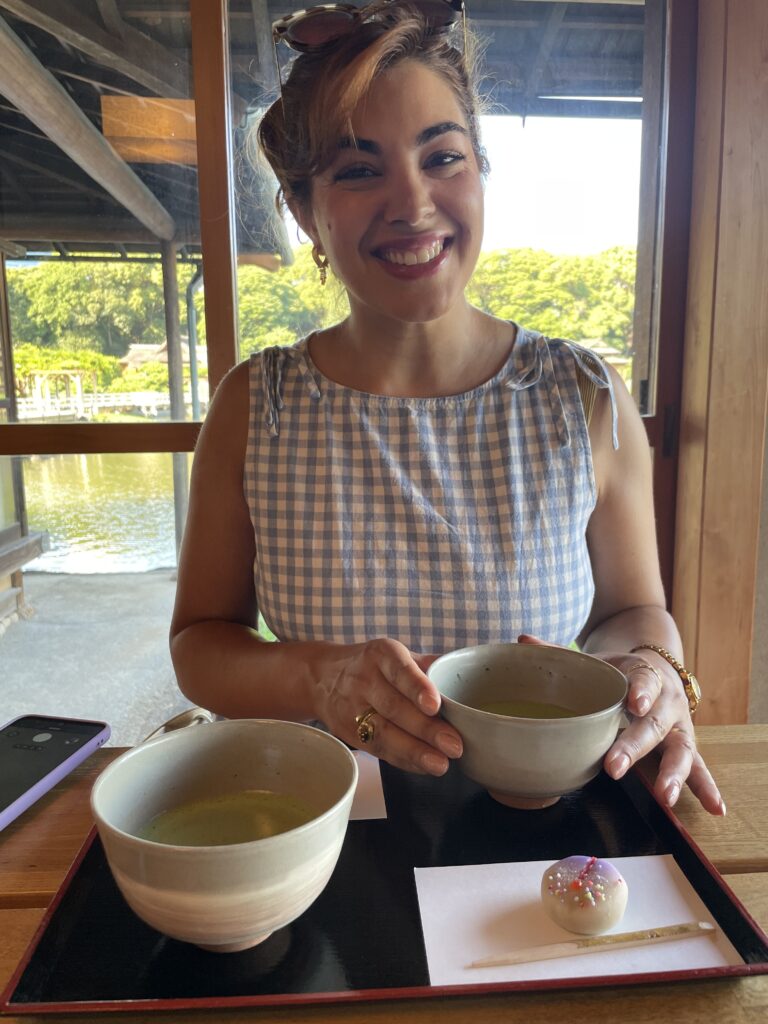
We called at a tea room in the middle of the garden and had matcha tea – proper matcha tea, not the green shite they serve you in Costa – and were surprised at how different it was (and how much more we liked it compared to the green shite they serve you in Costa).
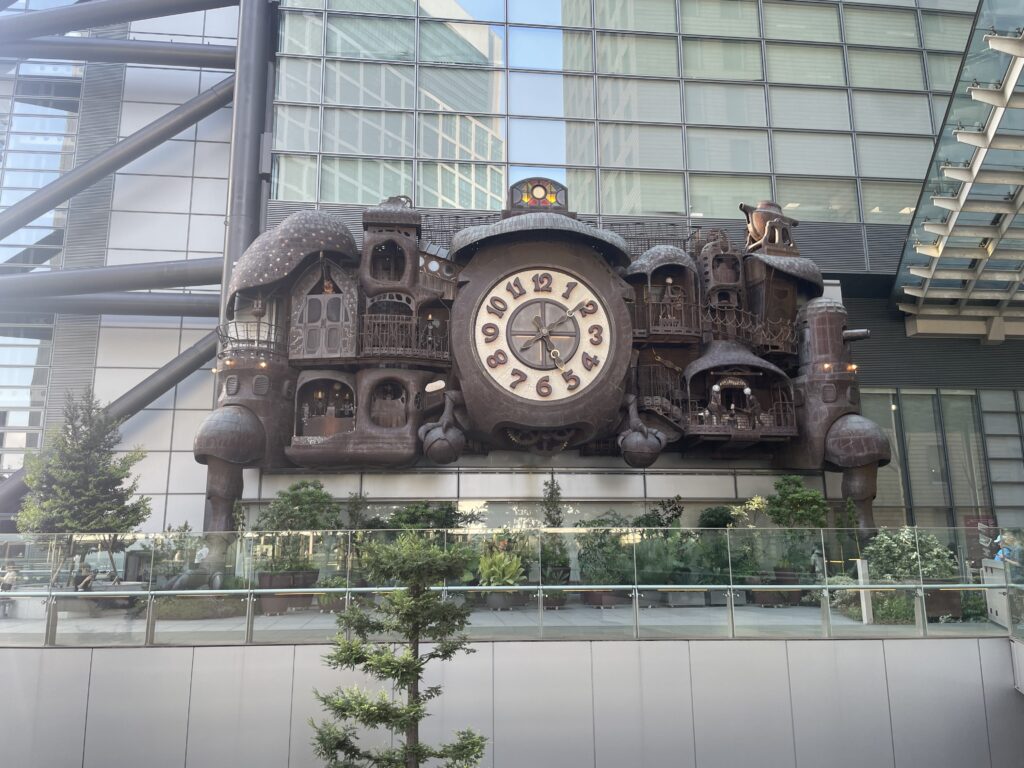
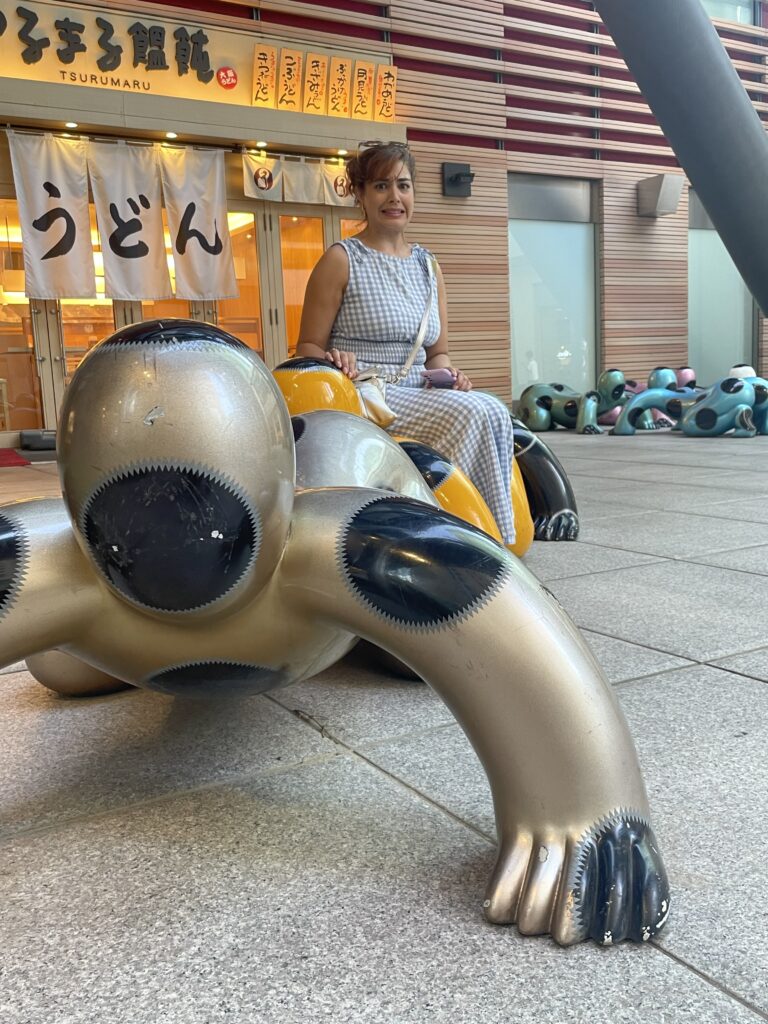
We walked to the station to get our train home to Shinjuku. Nearby we found the Ghibli Clock, an ornate (and gigantic) steampunk sculpture on the side of an otherwise faceless office building that is inspired by Studio Ghibli films and performs an elaborate cuckoo clock routine every hour. We also had a seat on some very questionable benches.
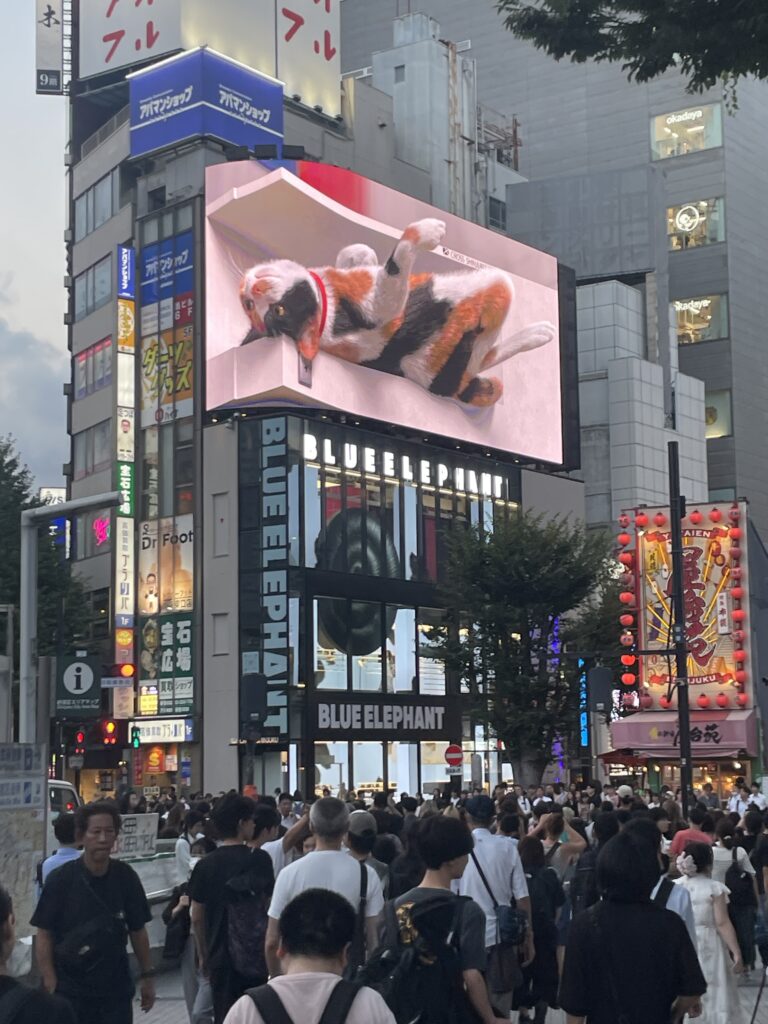
On the way back to the hotel we emerged from Shinjuku station to meet the 3D billboard that overlooks the road crossing. Its mascot (Japan loves a mascot) is a tortoiseshell cat that appears to inhabit a shelf on the side of the building, and spends its time rolling about, watching passing cars and playfully knocking objects off its virtual perch.
Tokyo is full of this stuff and it’s fantastic.
Gōtuko-ji
The next day was for us to explore alone, so we headed first to Gōtuko-ji, a Buddhist temple in the western district of Setagaya. It’s beautiful and peaceful, with ornate gatehouses, a five-storey pagoda and wooded gardens. There’s also a curious cat statue.
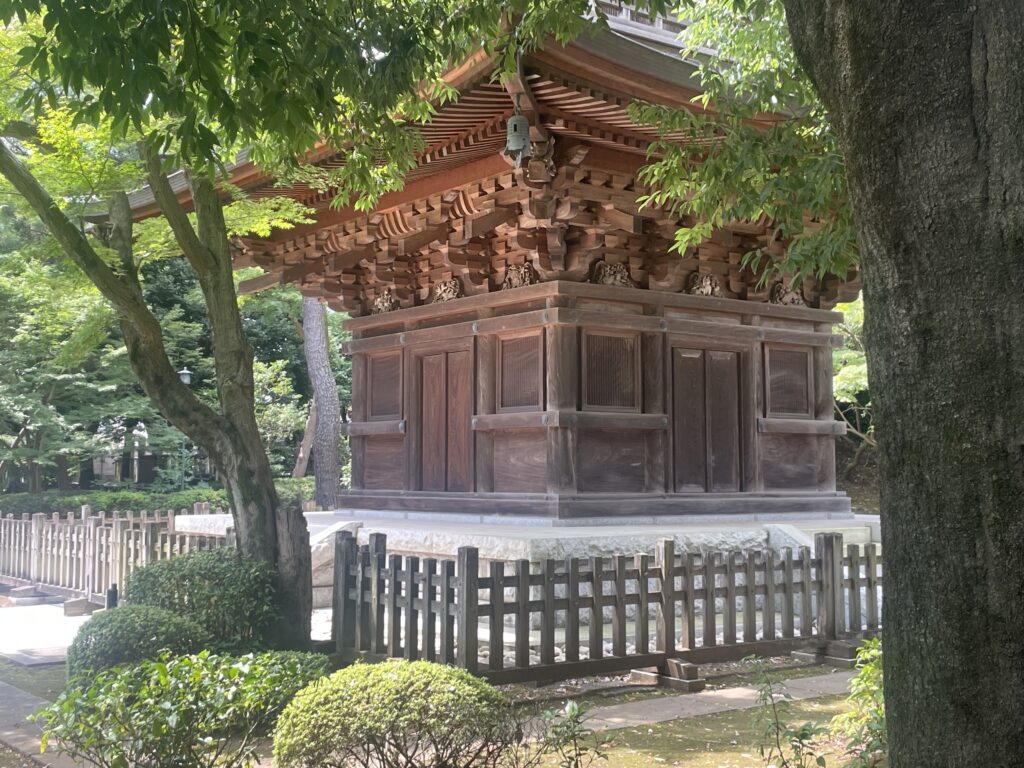
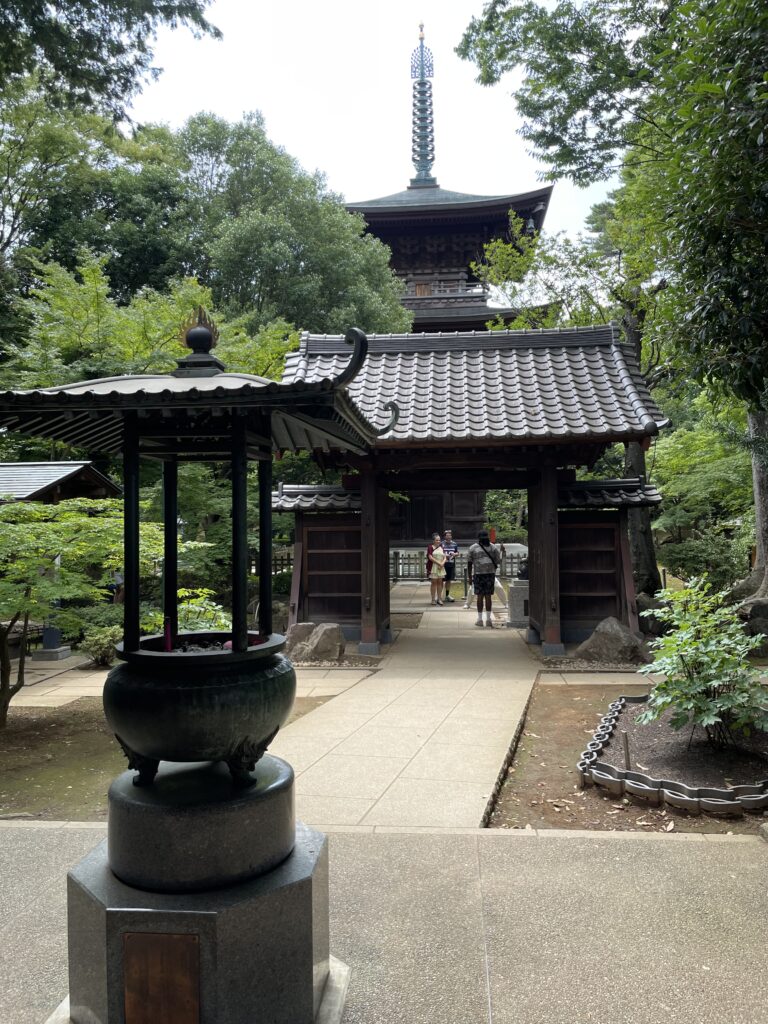
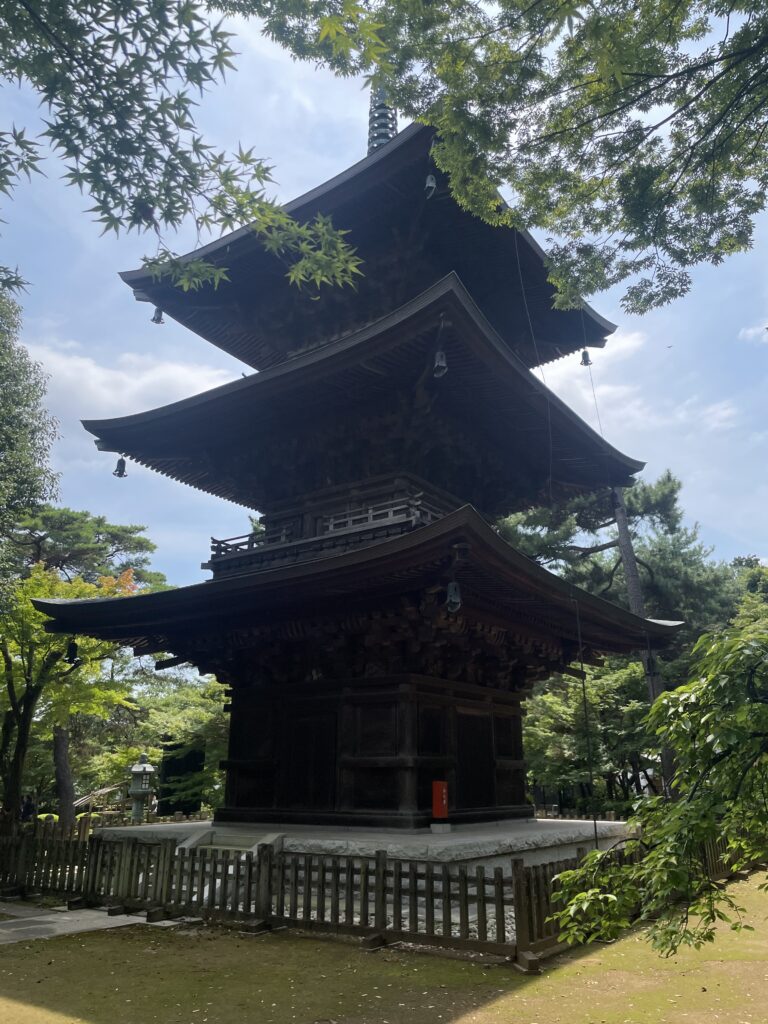
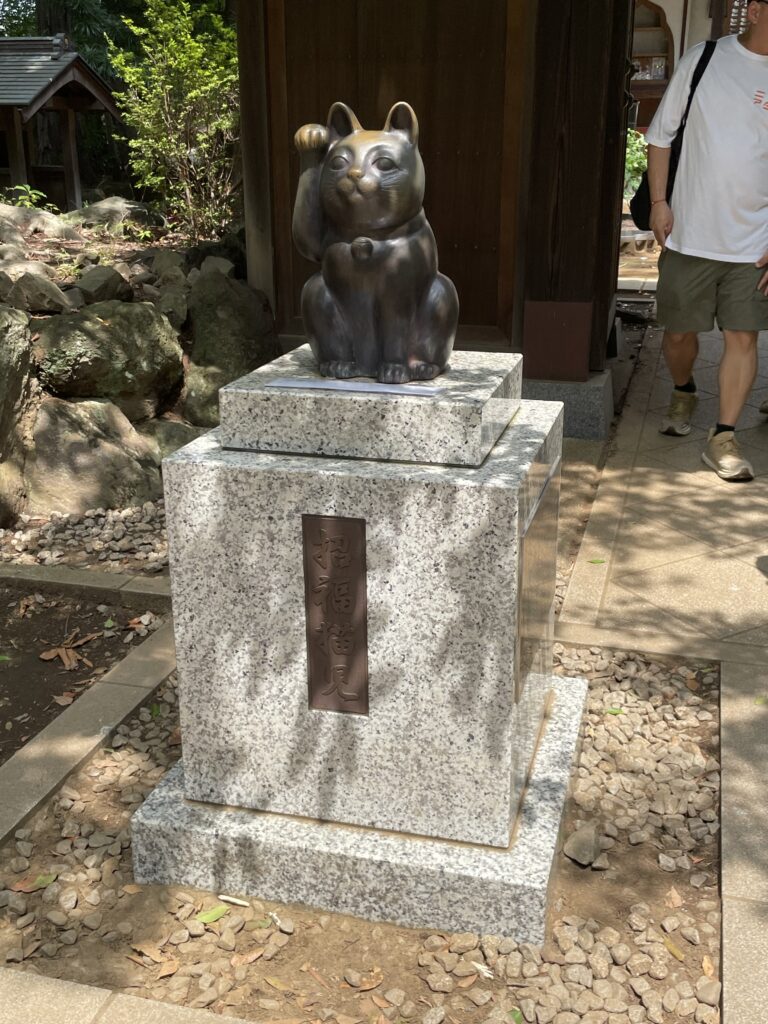
The temple’s legend is that a passing samurai saw a cat in the temple door waving to him, so he came inside, and by doing so was saved from lightning that struck the place he’d been standing. For this reason a statue was erected depicting a waving cat.
Then… it all got out of hand. You know those waving cat things you see, often with motorised waving arms? That started here. And now you can buy a cat statue, and inscribe it with your name or other people’s names, and add them to the thousands and thousands of cat statues at what has become known as the Cat Temple.
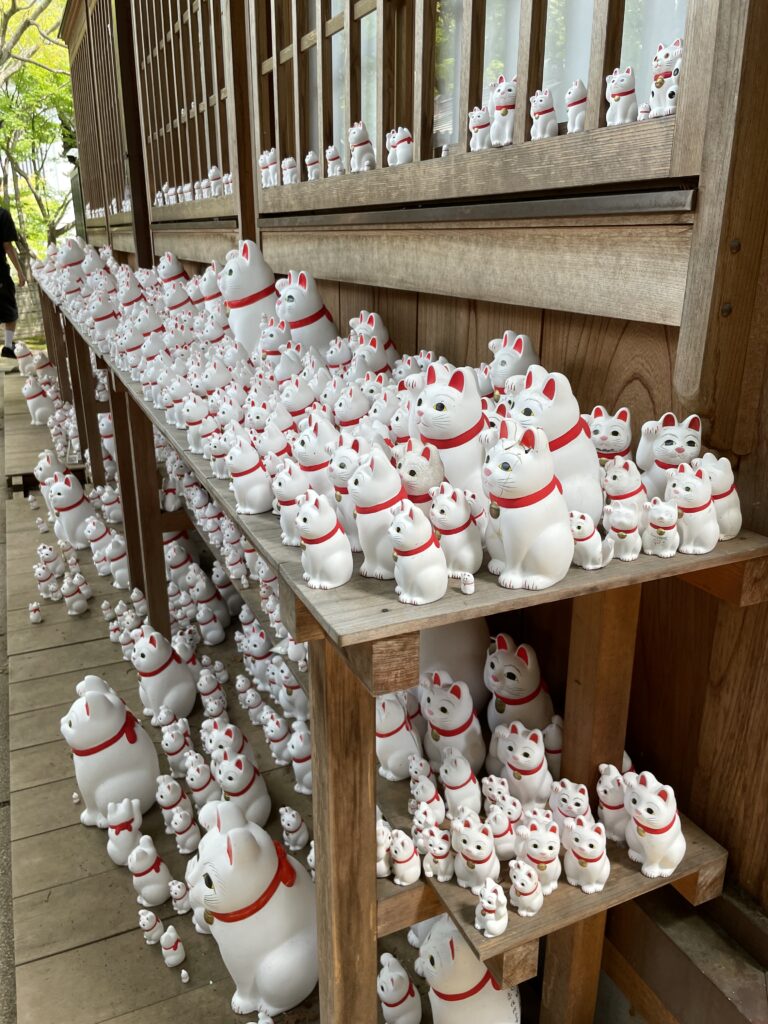
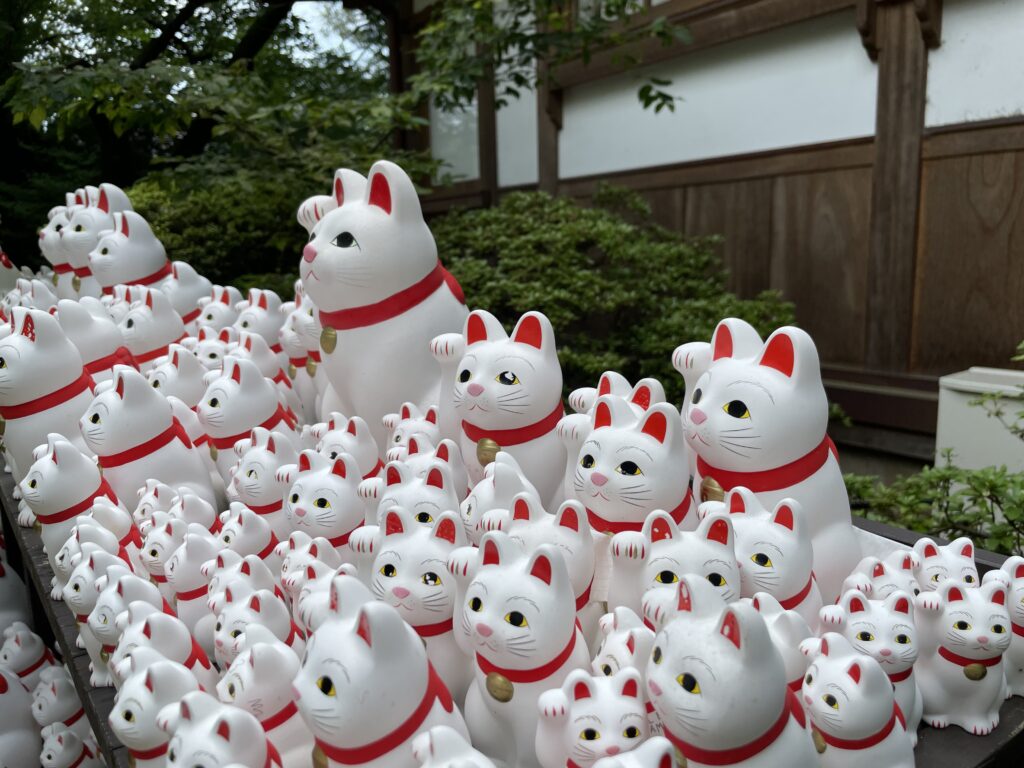
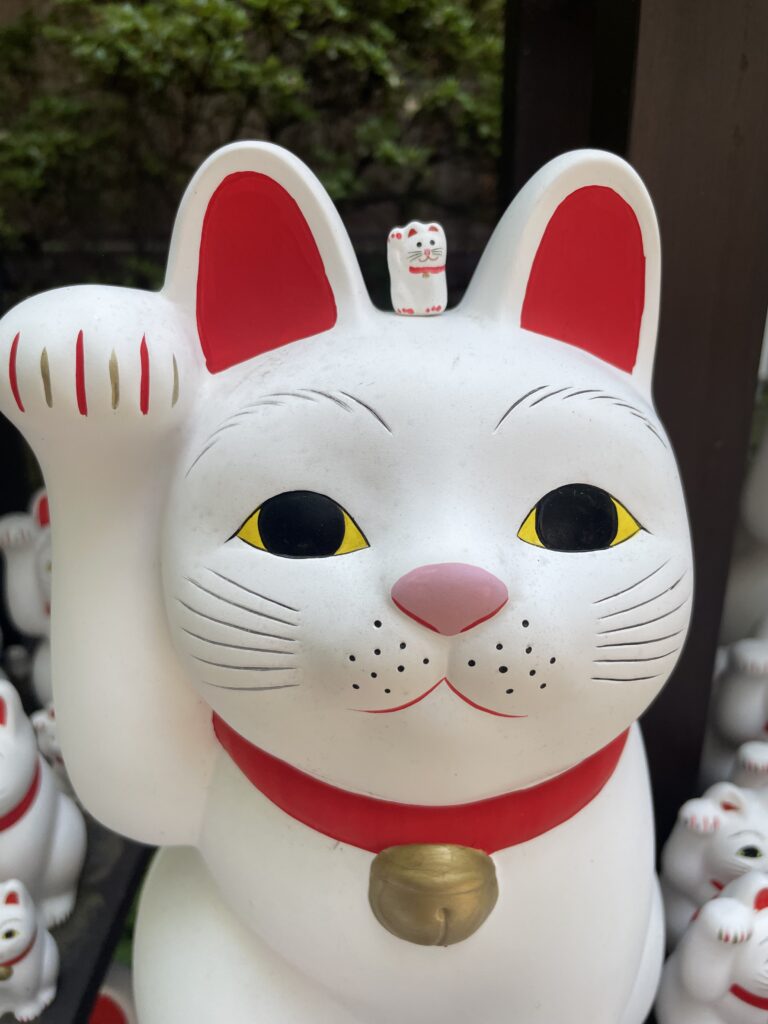
Suitably cat-saturated, we headed on to our next stop.
Imperial Palace Gardens
We took a detour through the grounds of the Imperial Palace to see the gardens, though in truth most of what you see are fortifications with a bit of garden inside them. Back when this was the seat of the Shogunate, a pretty despotic feudal regime, the Shogun had good reason to put several unscaleable walls and moats between himself and his loyal subjects.
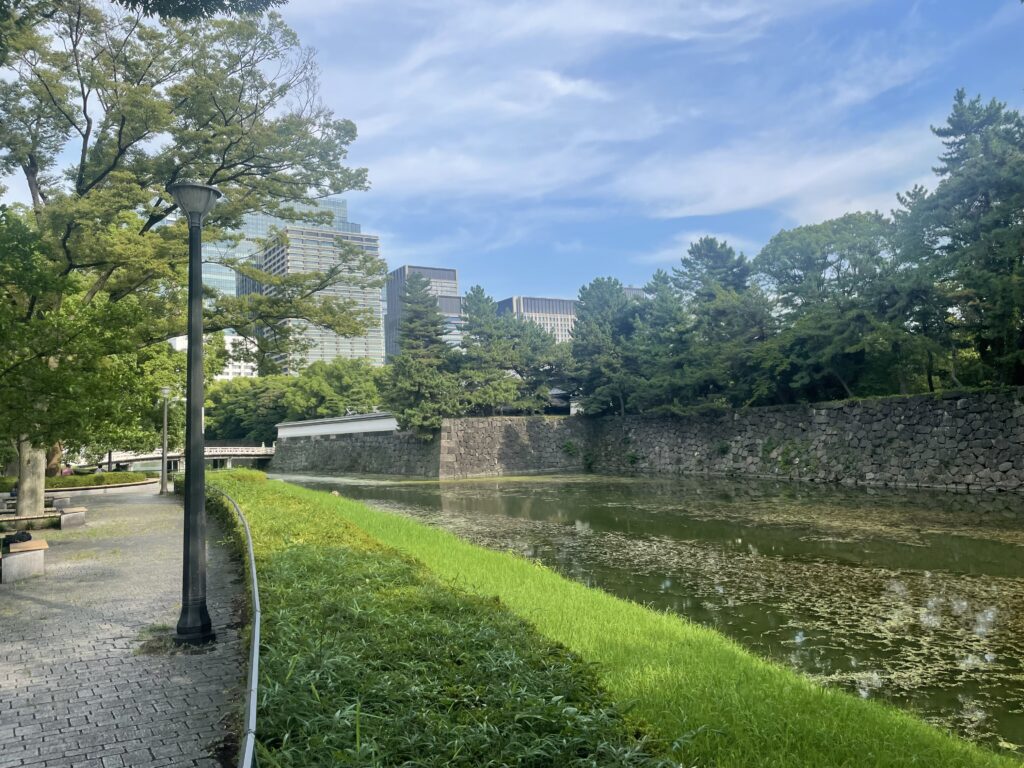
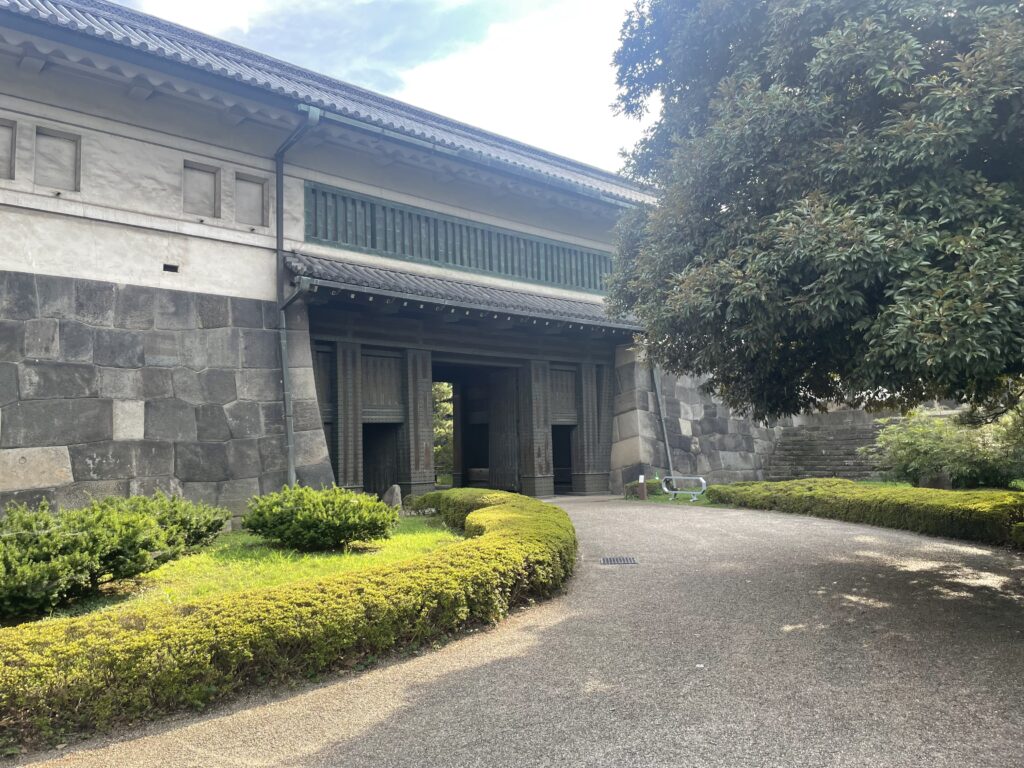
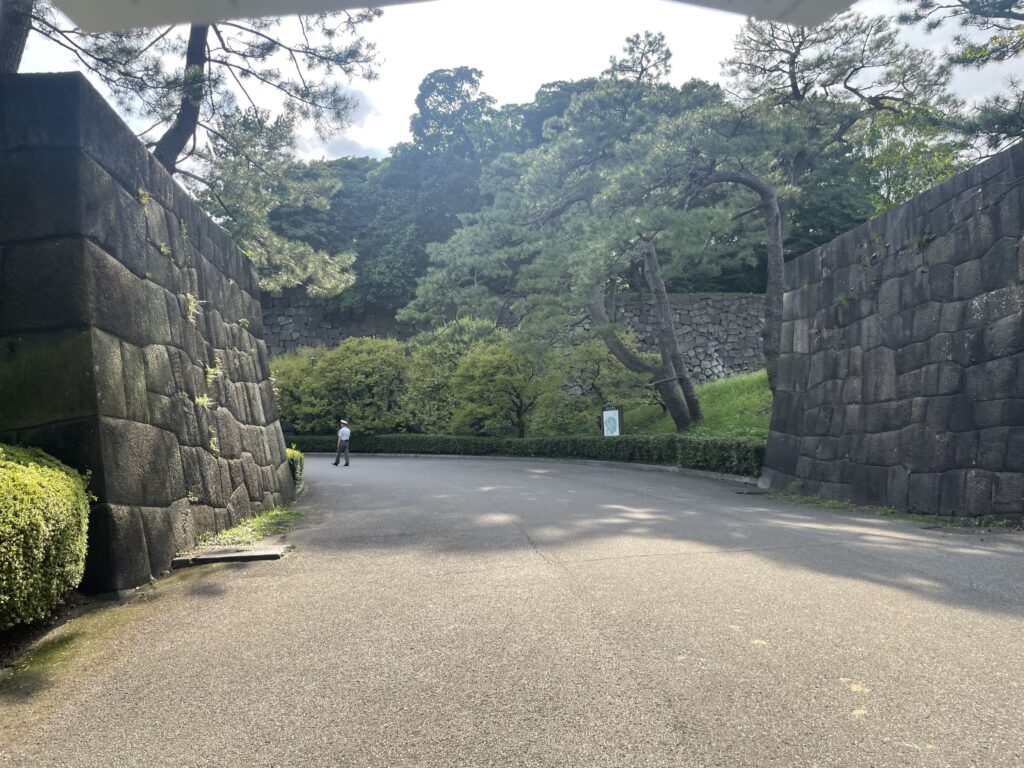
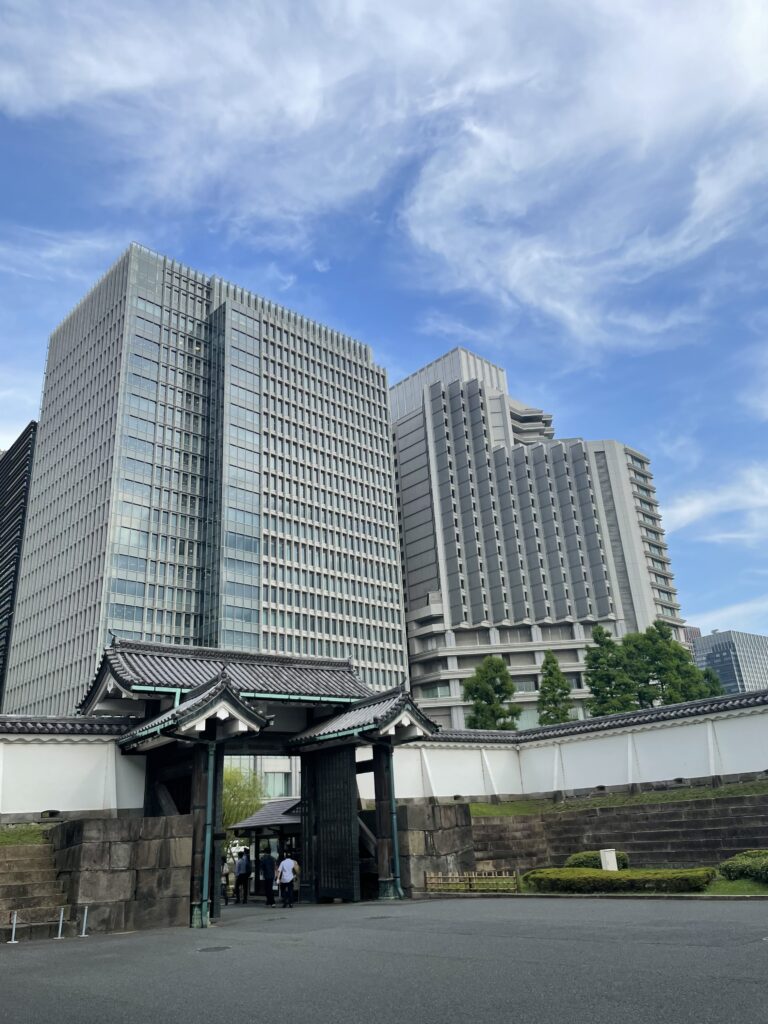
The gardens took us to a metro station on a direct line to our final stop of the day, Tokyo Skytree.
Tokyo Skytree
Tokyo famously has a red and white transmitter mast right in the heart of the city, but that’s no longer the tallest thing you can go up to see the view. There’s now a much bigger thing called the Skytree.
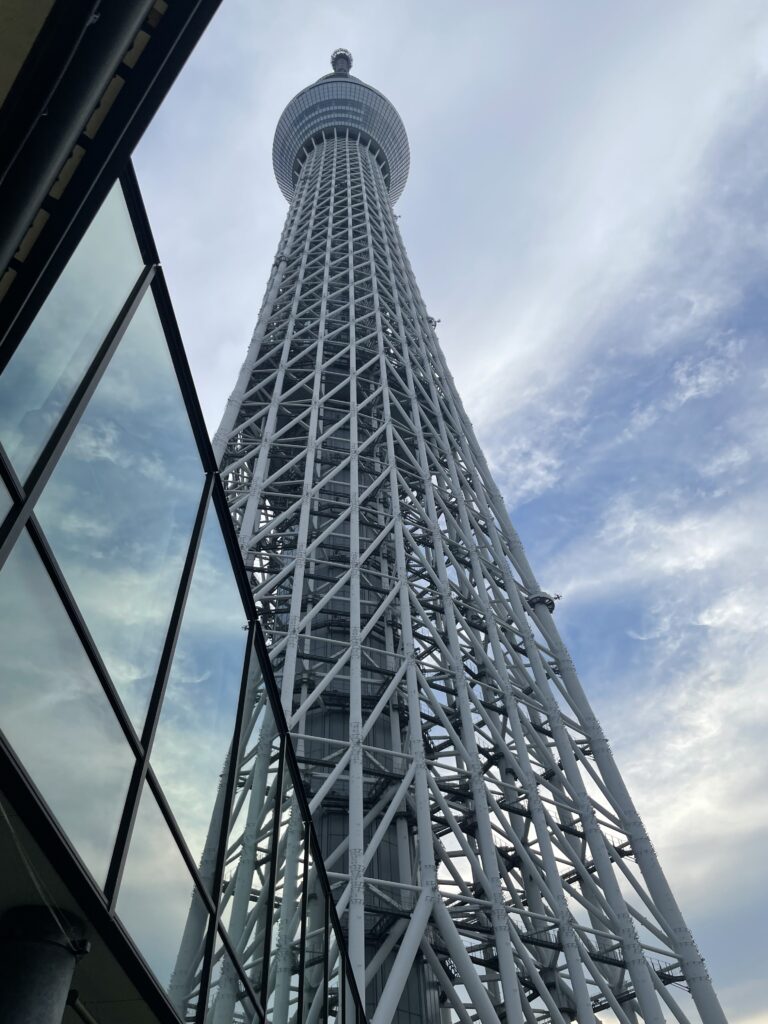
A lift takes you 350m up to a point where Tokyo’s size is finally apparent. It’s so small beneath you that it looks like a model village, and it stretches away in every direction as far as the eye can see, a seemingly infinite city.
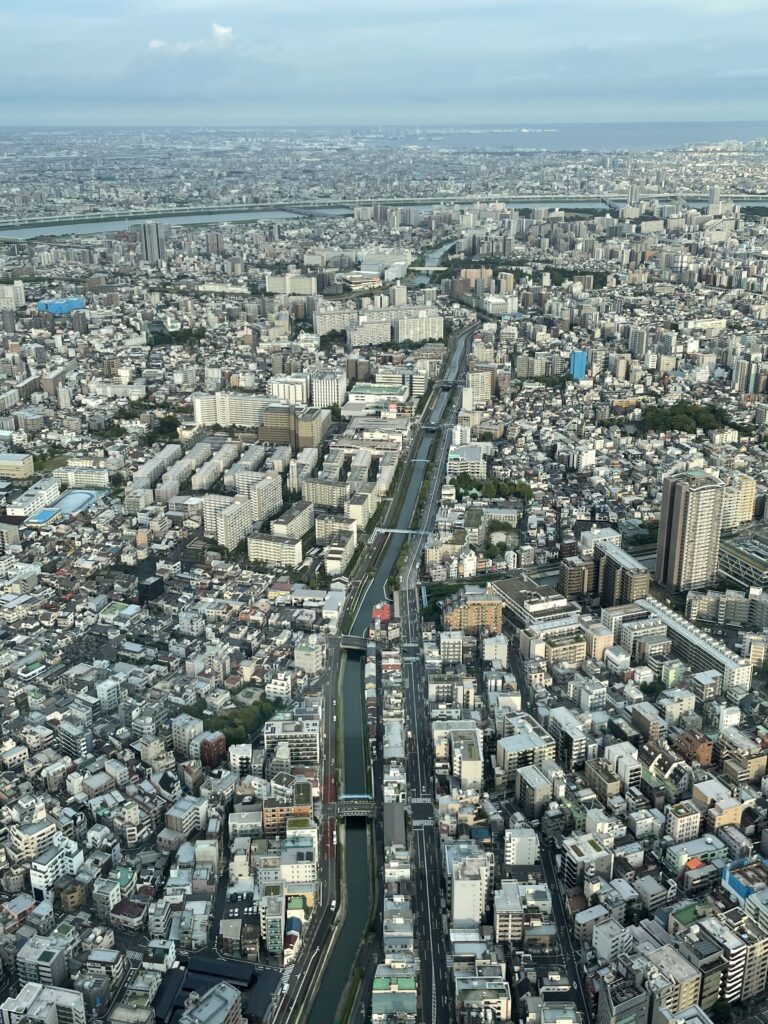
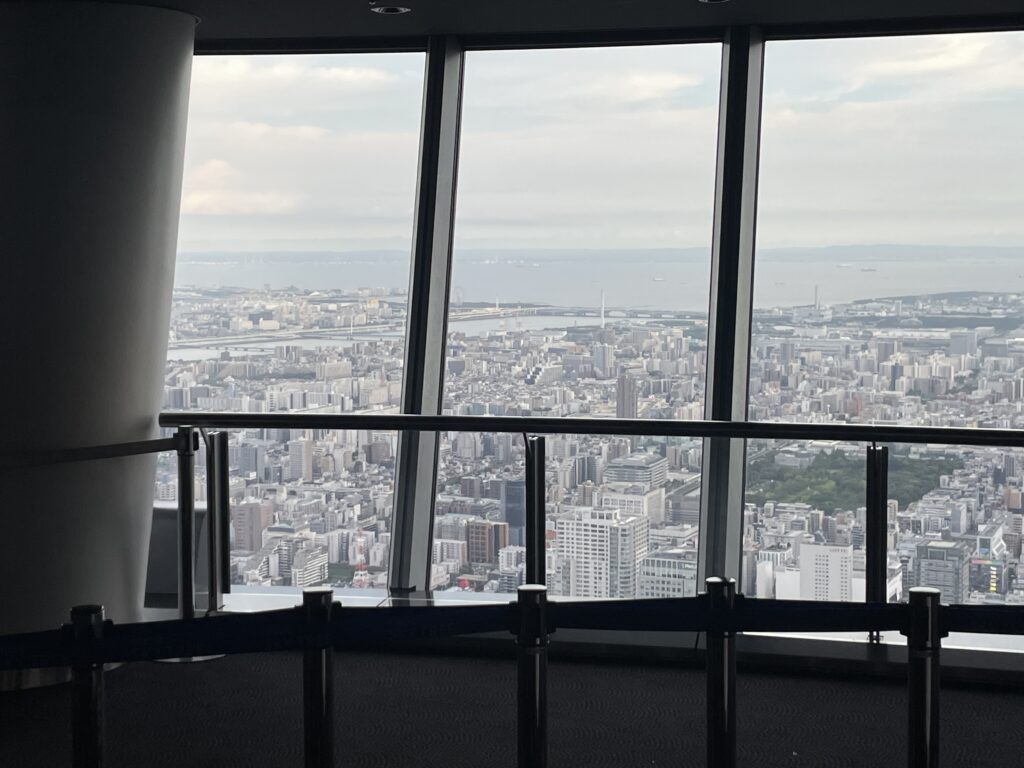
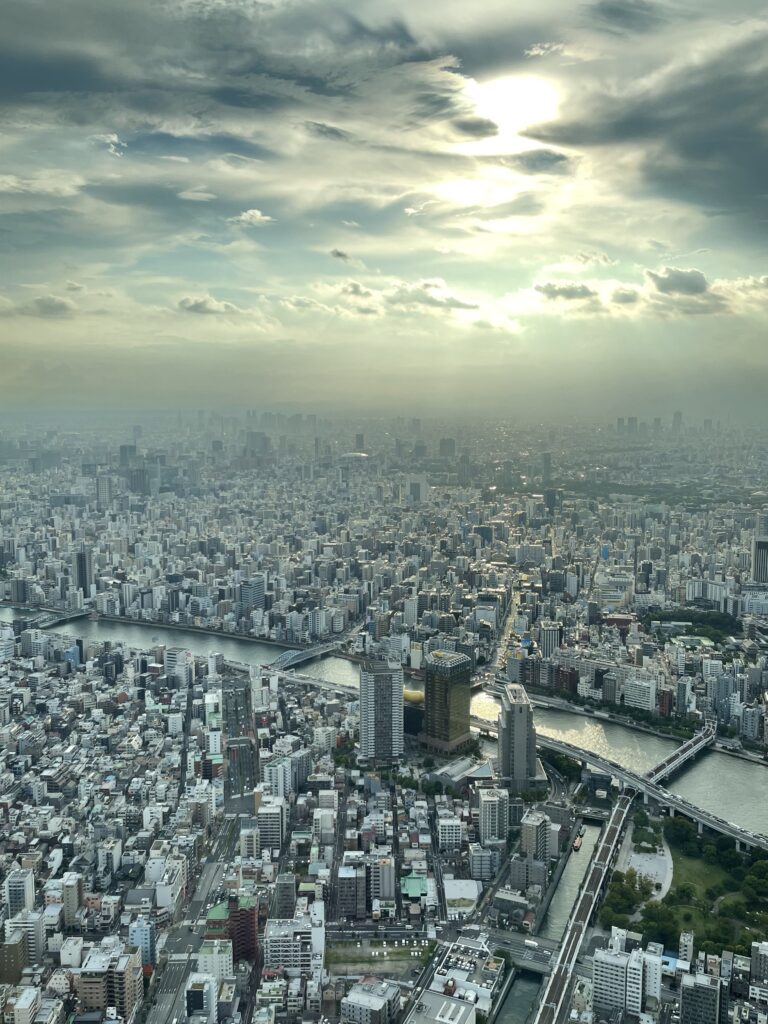
We were there as the sun was beginning to set, so we got a really stunning light show from the clouds.
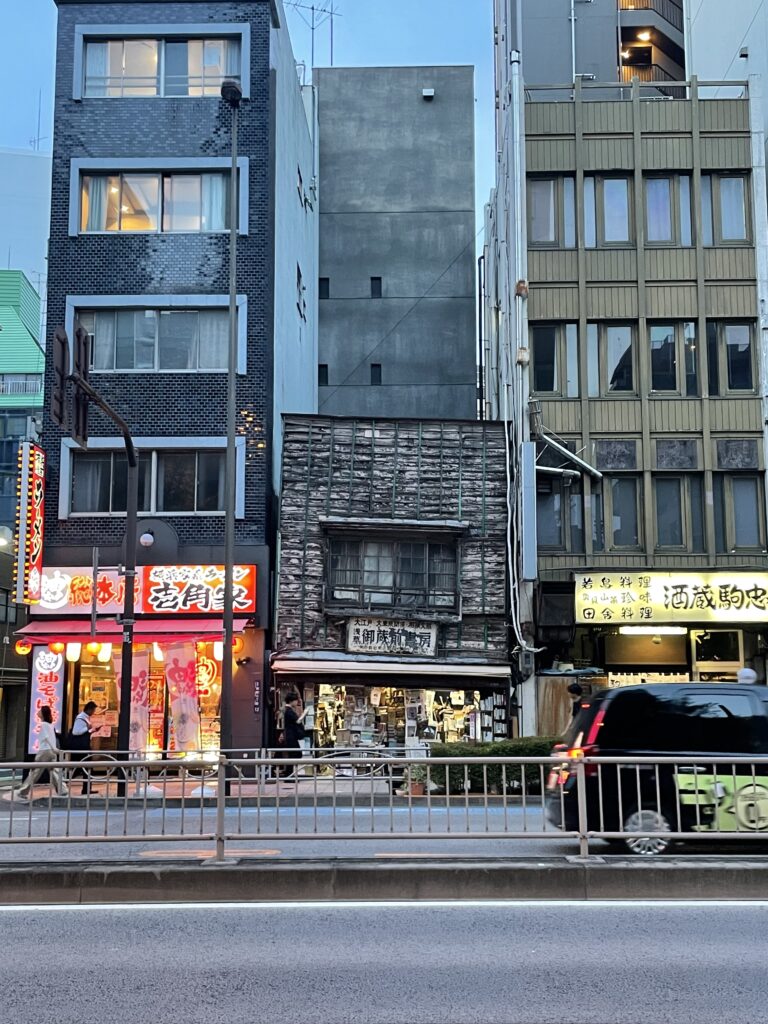
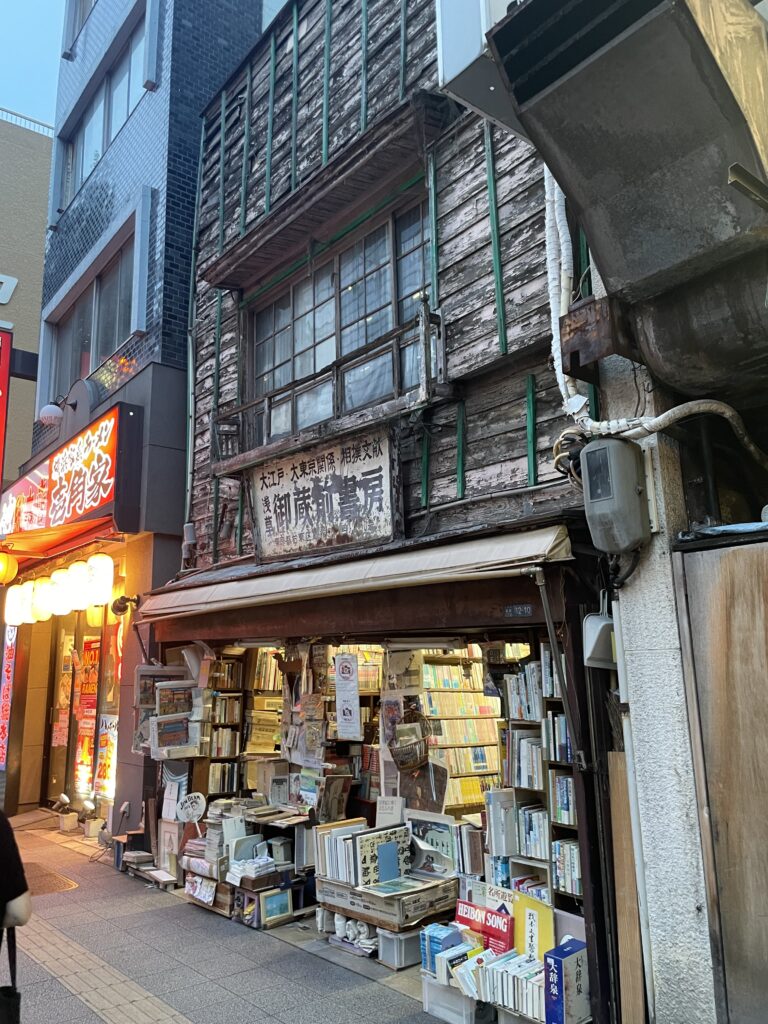
On the way back to the hotel, we walked along a length of street somewhere in eastern Tokyo as we changed between metro lines. (There isn’t one metro, but several, run by various competing companies and government bodies – some are very well integrated and others will make you walk down the street for a bit to change trains.) On the way we passed a single wooden shop, completely dwarfed by everything around it.
This is what all of Tokyo would have looked like a hundred years ago, but most of these buildings were lost in firebombing during the war and many of the rest were cleared for reconstruction. To see one still here, listing precariously in its old age, was really unexpected.
Kappabashi Street
On our third day – a short one because we had a bullet train to catch in the late afternoon – we headed towards Kappabashi Street, calling in first at a vintage kimono shop that Kate wanted to see.
I should add, at this point, that shopping for vintage kimonos and obis (the belts you tie them with) was one of the things Kate most wanted to do, and over the next couple of weeks we’d spend quite a lot of time in and out of little clothes shops like this. But this was our first, and it was a treat.
The lady who ran the shop was delighted to see us, delighted we bought something, and her mood elevated to the ecstatic when she learned we were on honeymoon. She declared that we must have a gift, got us to choose kimonos from the shop’s stock, and then dressed us with all the formal touches, including a fan for Kate to hold and an actual Samurai sword for me. She filmed the whole thing and took these pictures with us too.
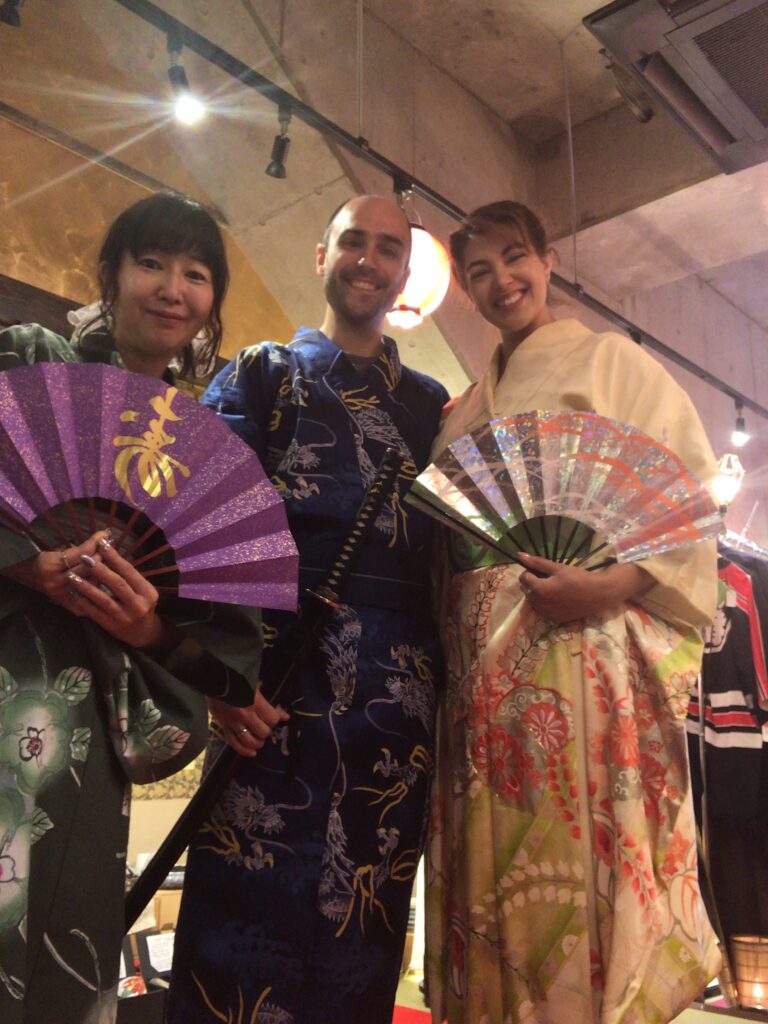
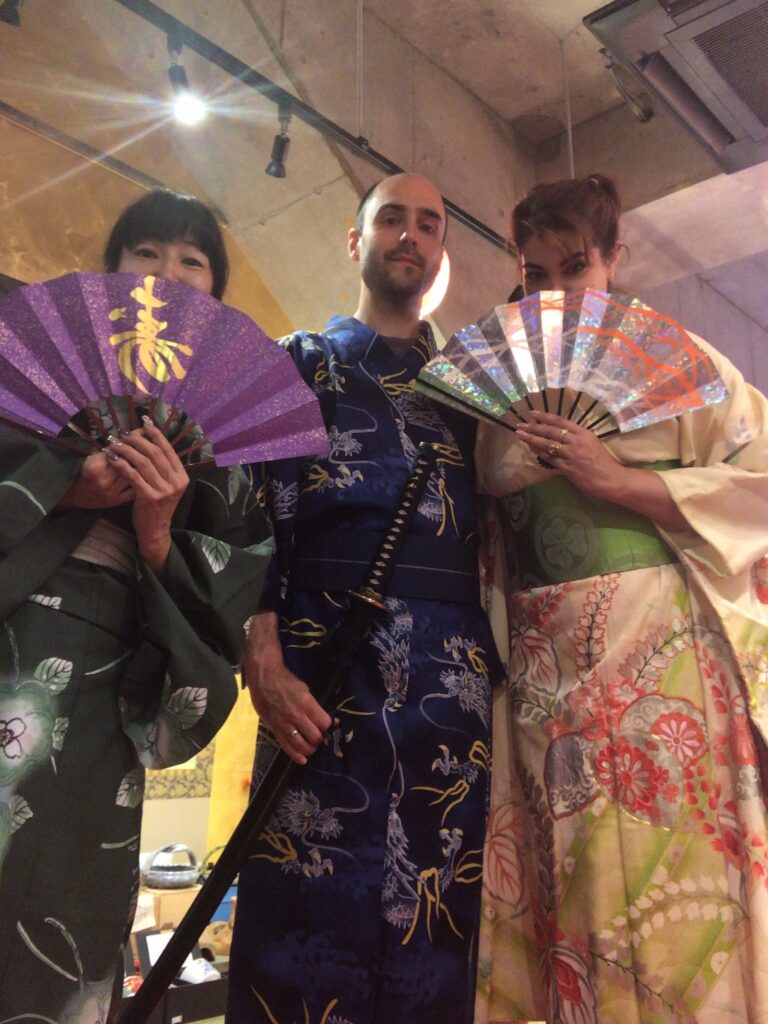
I think it’s fair to say that I was pleasantly surprised by how I look in a kimono.
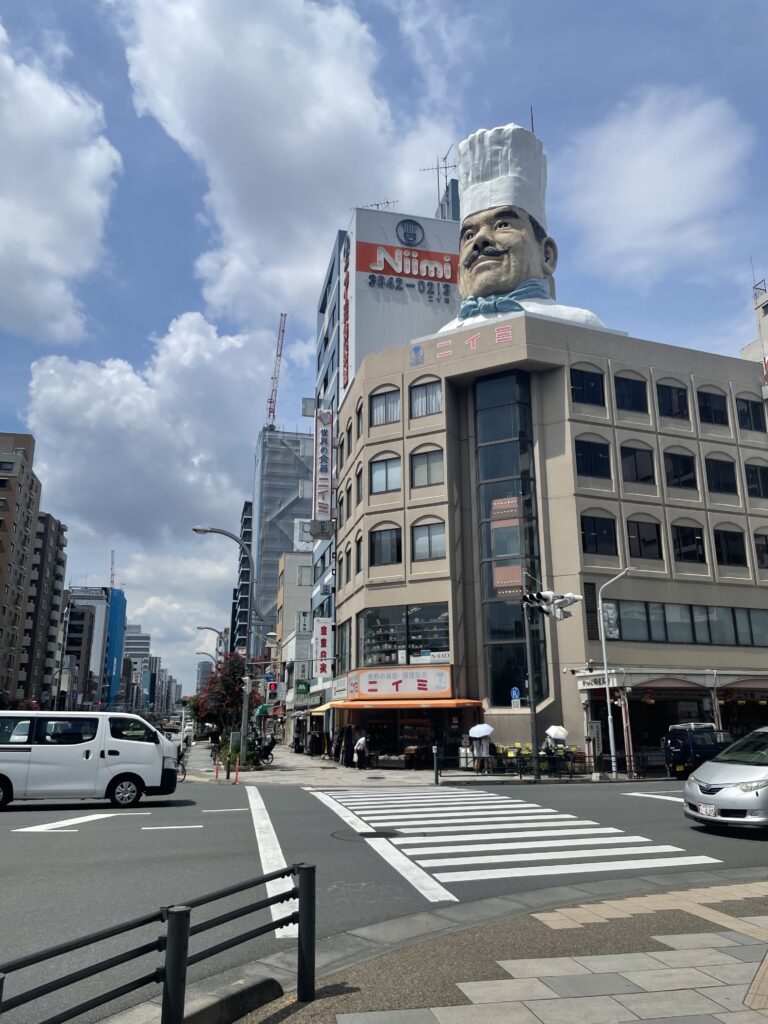
Then we reached Kappabashi Street itself, which is where kitchenwares are sold. It’s a bit like the way all the doctors in London are clustered around Harley Street; if you sell pots, pans or crockery in Tokyo you want an address here.
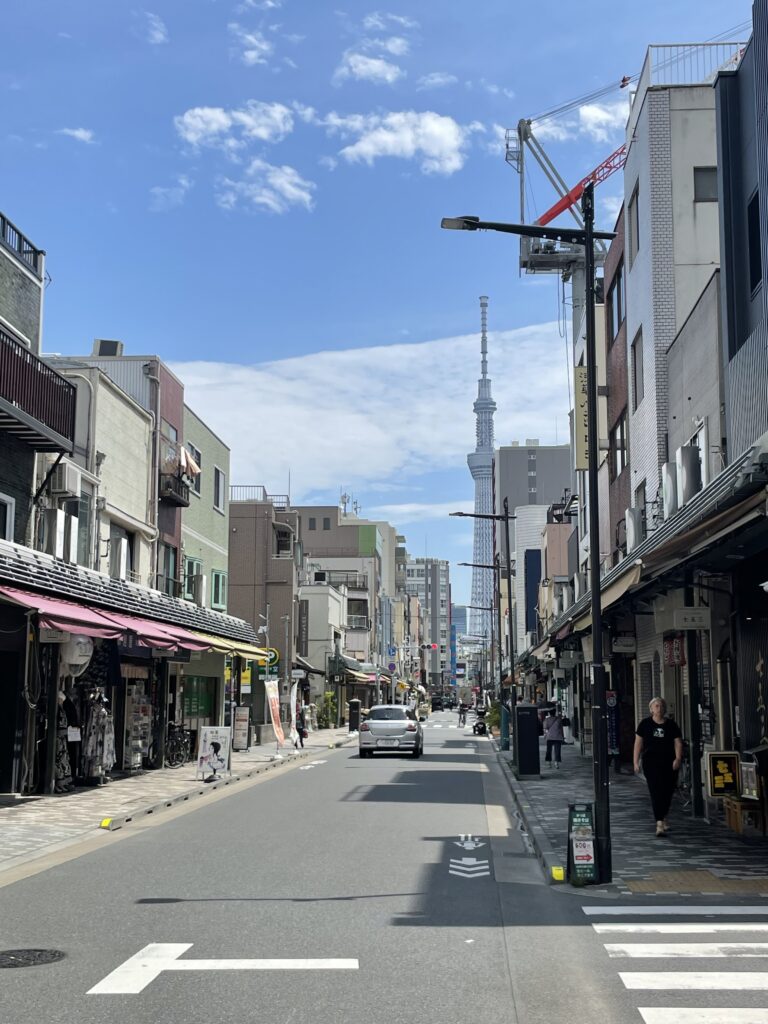
A giant chef stands on top of a building at the entrance to the street so that you know you’ve arrived because… well, because it’s Tokyo.
Asakusa
As gleaming and new as most of Tokyo is – much of what you see in the city was built after the Second World War, and a good deal of that has since been torn down and replaced several times over with ever bigger and taller buildings – Tokyo does have an old town. The old bit is called Asakusa, and is tiny, because not much escaped the firebombing.
There are some very touristy streets of old buildings here, now lined with souvenir shops and cafes and places to rent a kimono. The main attraction is an enormous Shinto shrine called Sensō-ji, which is beautiful but also spectacular just for its sheer size.
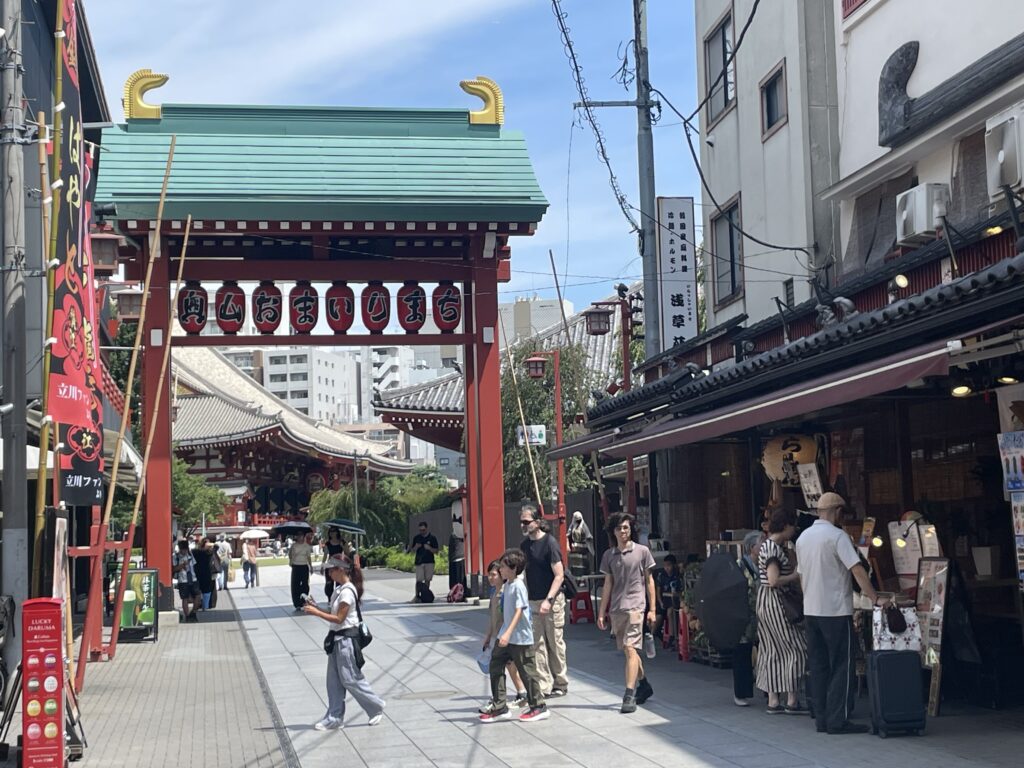
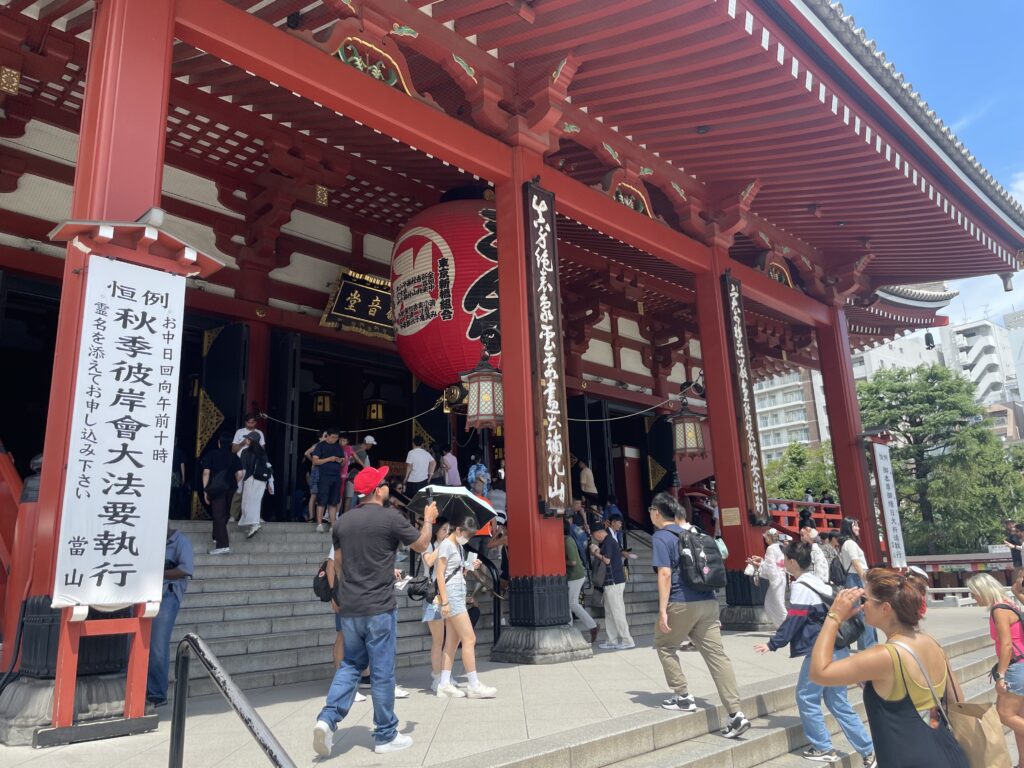
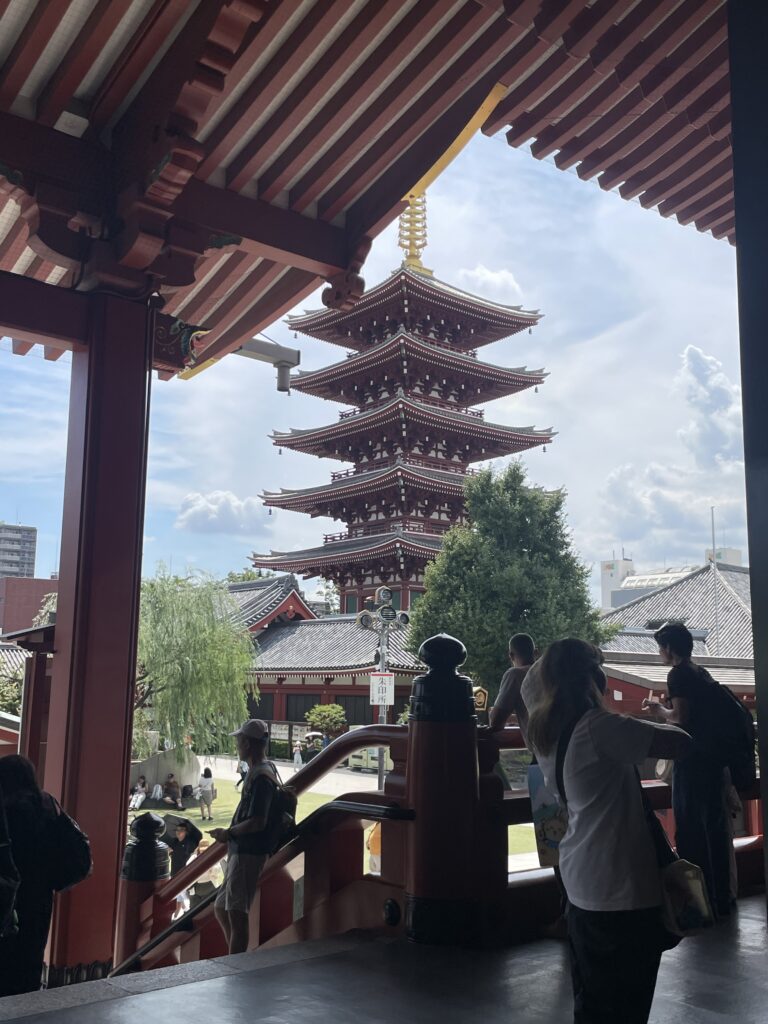
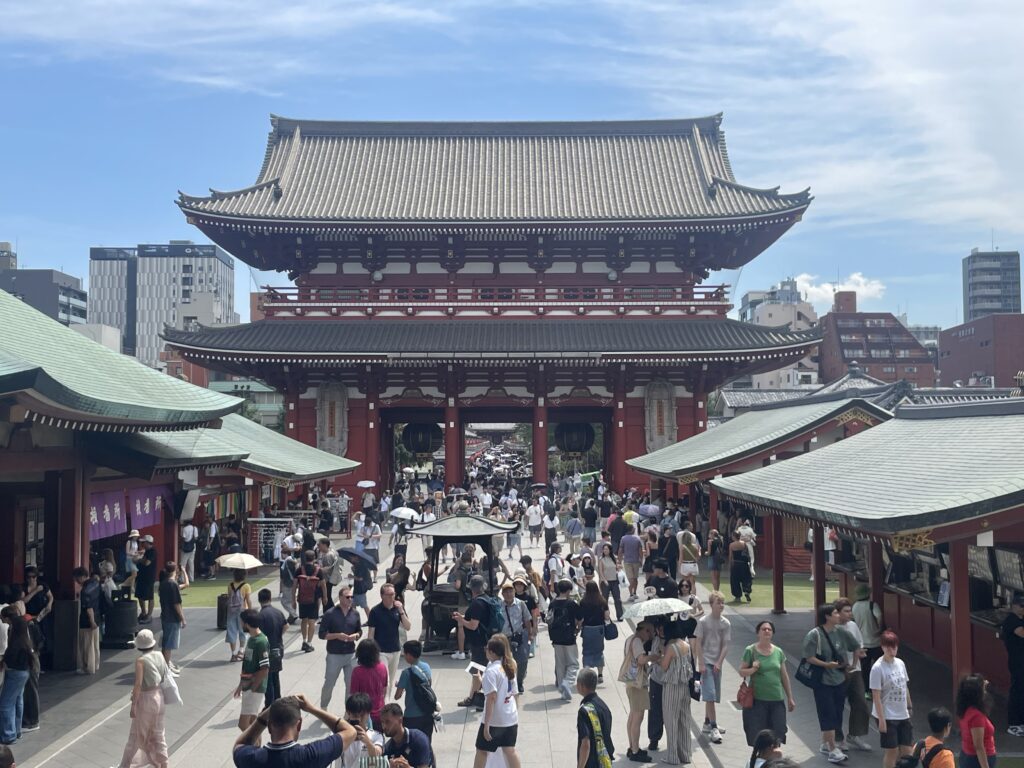
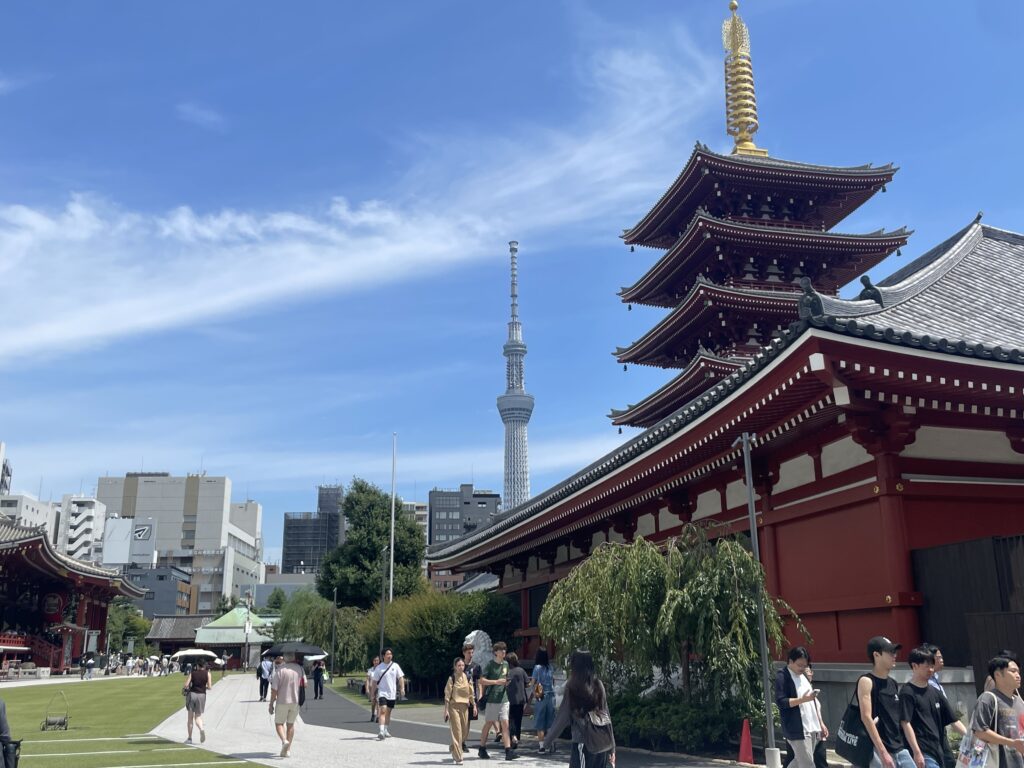
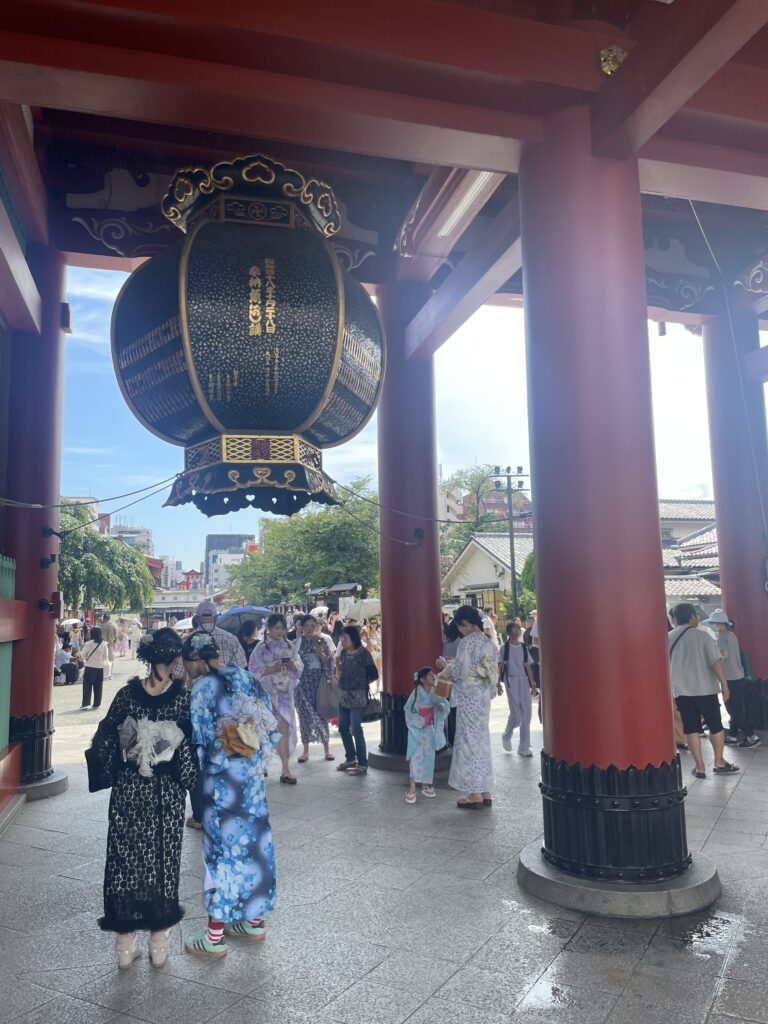
Along with a pagoda – mandatory at shrines and temples – and impressive buildings for prayer to take place, Sensō-ji also has some of the most enormous paper lanterns hanging at its door. The place is rammed with tourists but very much worth a visit all the same.
Nihonbashi Bridge
Our final stop, before we collected our bags and boarded our train, was Nihonbashi Bridge, because I’m me and Kate wasn’t going to get through the whole honeymoon without us looking at something road-related.
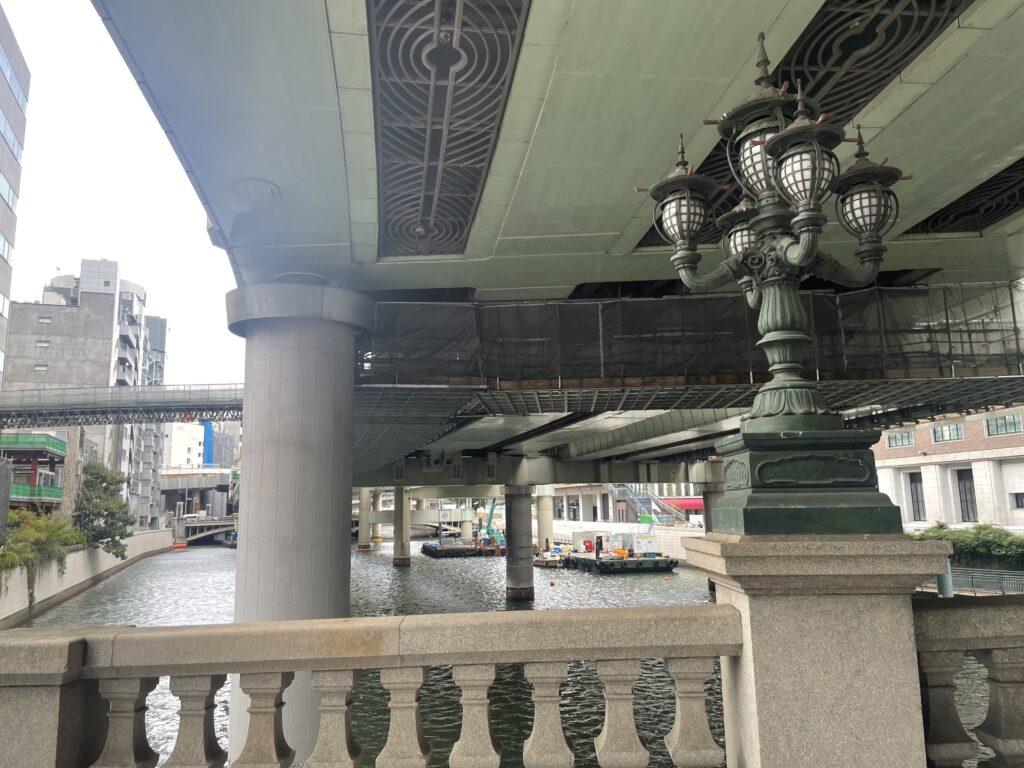
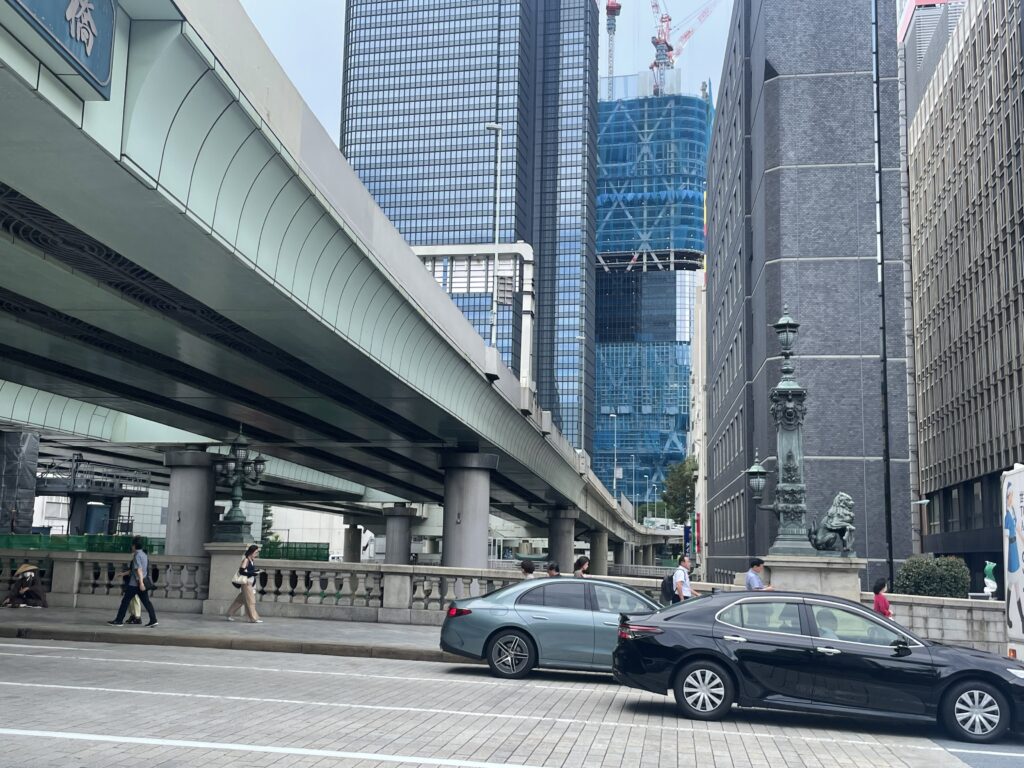
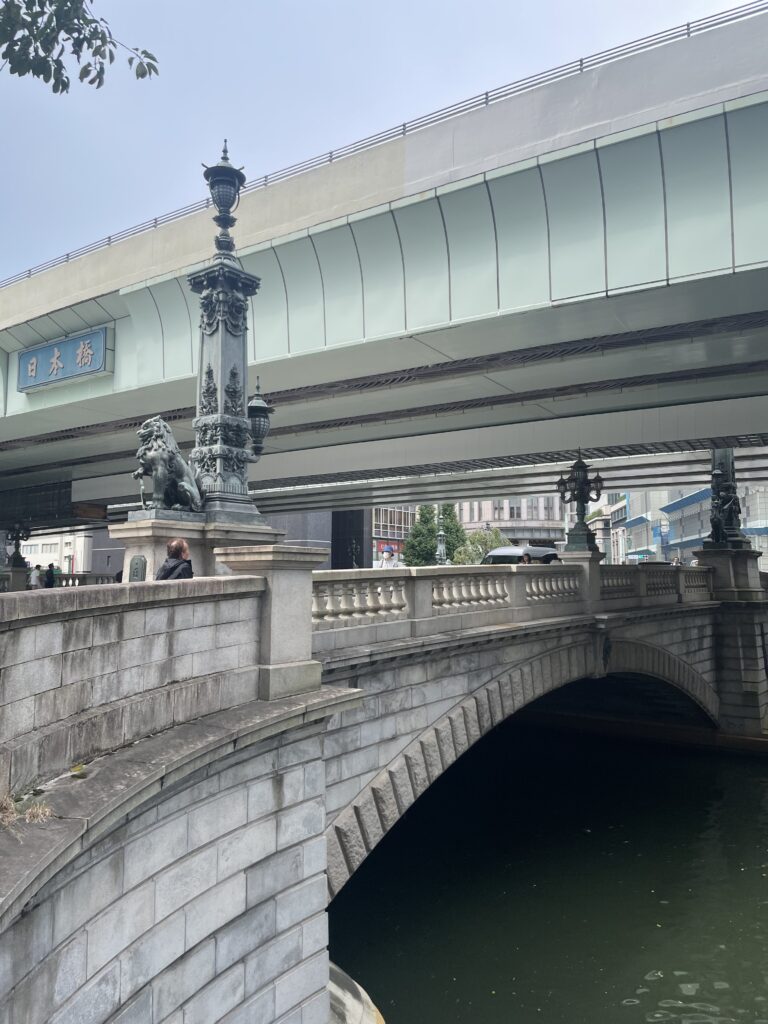
I won’t extend this post further by describing it in detail, because I’ve already done that on my much geekier blog, so you can read about it there if you’d like to know what on earth is going on in these pictures.
From the hotel we took the Yamanote Line to Shinjuku, feeling like locals who knew how to get around this place without a second thought, and stepped aboard our first Shinkansen which took us to our second Japanese megacity, Nagoya. In between feeling like locals and climbing aboard the train, we had dreadful problems with tickets and had to buy new ones, which took a lot of the swagger out of us again. I’ll save that for another post.
Anyway… next time: Nagoya!